Tunisia’s President Kais Saied has borrowed more than a few pages from Donald Trump’s playbook over the past couple of years.
Since taking office, he has attacked the system that propelled him to power, insulted parliament and parliamentarians, and undermined the parliamentary system on which the country’s democratic system is based, all in the name of “the people”.
Read more at:
Tunisia’s Trumpian president | Politics | Al Jazeera
Showing posts with label Tunesia. Show all posts
Showing posts with label Tunesia. Show all posts


10/28/14
Tunisian Elections: Islamist party congratulates secular rivals on election win
Official election commission results from Sunday's vote were still to
come, but exit polls and statistical samples both point
towards a win for
Nida Tunis (Tunisia Calls), with about 35 percent of the seats in the 217-seat parliament.
That would give the party the right to name a prime minister. Its leader, 87-year-old Tunisian political veteran Beji Caid Essebsi, had vowed to form a coalition with other parties.
"The Tunisian people have reinforced their commitment to democracy with credible and transparent elections that gave Tunisians of all political tendencies a free vote," Annemie Neyts-Uytterbroeck, head of the European Union's observer mission, told reporters on Tuesday.
The election had been held amid tight security aimed to protect against extremist attacks. Sunday marked the country's first parliamentary vote since 2011 when it became the birthplace of the Arab Spring revolution, which has since led to turmoil in neighboring nations. Tunisia has also struggled with security in the revolution's aftermath, though not to the same extent.
Read more: Tunisia Islamist party congratulates secular rivals on election win | News | DW.DE | 28.10.2014
That would give the party the right to name a prime minister. Its leader, 87-year-old Tunisian political veteran Beji Caid Essebsi, had vowed to form a coalition with other parties.
"The Tunisian people have reinforced their commitment to democracy with credible and transparent elections that gave Tunisians of all political tendencies a free vote," Annemie Neyts-Uytterbroeck, head of the European Union's observer mission, told reporters on Tuesday.
The election had been held amid tight security aimed to protect against extremist attacks. Sunday marked the country's first parliamentary vote since 2011 when it became the birthplace of the Arab Spring revolution, which has since led to turmoil in neighboring nations. Tunisia has also struggled with security in the revolution's aftermath, though not to the same extent.
Read more: Tunisia Islamist party congratulates secular rivals on election win | News | DW.DE | 28.10.2014
10/7/14
Britain: British ISIS deserters stranded in Turkey
About 100 Britons who deserted the Islamic State of Iraq and Syria
are stranded in Turkey because they fear to return to the United
Kingdom, The Sunday Times newspaper reported, quoting an official.
“We understand there’s around 100 British jihadists who are waiting in limbo in Turkey before they can make their way to countries like Pakistan and Bangladesh and Algeria – countries where their parents were born and where they have the family support they need to settle in,” the daily quoted a Whitehall official as saying.
“The choices for these jihadists have become very limited — they don’t want to return to Syria because they would most likely be killed for defecting and they can’t come back to Britain without the prospect of being locked up,” the official said.
The paper said some of the fighters of North African and Arabic backgrounds were trying to leave Turkey for countries including Tunisia, Algeria, Yemen and Libya.
Read more: British ISIS deserters stranded in Turkey: report - Al Arabiya News
“We understand there’s around 100 British jihadists who are waiting in limbo in Turkey before they can make their way to countries like Pakistan and Bangladesh and Algeria – countries where their parents were born and where they have the family support they need to settle in,” the daily quoted a Whitehall official as saying.
“The choices for these jihadists have become very limited — they don’t want to return to Syria because they would most likely be killed for defecting and they can’t come back to Britain without the prospect of being locked up,” the official said.
The paper said some of the fighters of North African and Arabic backgrounds were trying to leave Turkey for countries including Tunisia, Algeria, Yemen and Libya.
Read more: British ISIS deserters stranded in Turkey: report - Al Arabiya News
12/17/12
Middle East: Rocks, insults on Tunisian uprising anniversary
Protesters hurled rocks and heckled Tunisian President Moncef Marzouki on Monday during the second anniversary commemoration of the self-immolation of a fruit vendor that sparked the Arab Spring.
Exactly two years after a harassed young fruit vendor in the provincial Tunisian town of Sidi Bouzid set himself alight, sparking the Arab Spring, Tunisian President Moncef Marzouki was heckled Monday during a wreath-laying ceremony at the tomb of Tunisia’s best-known martyr. "You came a year ago and you promised things would change in six months, but nothing has changed,” shouted one protester. "We do not want you here," added another.
Hours later, when the Tunisian president had just finished delivering an address in the town’s main square square, rocks were hurled at the podium just as parliamentary speaker Mustapha Ben Jaafar was about to speak.
Security forces swiftly evacuated the two politicians to a regional government headquarters, according to an AFP journalist, and there were no reports of injuries.
Read more: Rocks, insults on Tunisian uprising anniversary - TUNISIA - FRANCE 24
Exactly two years after a harassed young fruit vendor in the provincial Tunisian town of Sidi Bouzid set himself alight, sparking the Arab Spring, Tunisian President Moncef Marzouki was heckled Monday during a wreath-laying ceremony at the tomb of Tunisia’s best-known martyr. "You came a year ago and you promised things would change in six months, but nothing has changed,” shouted one protester. "We do not want you here," added another.
Hours later, when the Tunisian president had just finished delivering an address in the town’s main square square, rocks were hurled at the podium just as parliamentary speaker Mustapha Ben Jaafar was about to speak.
Security forces swiftly evacuated the two politicians to a regional government headquarters, according to an AFP journalist, and there were no reports of injuries.
Read more: Rocks, insults on Tunisian uprising anniversary - TUNISIA - FRANCE 24
10/17/12
Freedom in the World 2012 - The Arab Uprisings and their Global Repercussions
The political uprisings that swept across the Arab world over the past year represent the most significant challenge to authoritarian rule since the collapse of Soviet communism. In a region that had seemed immune to democratic change, coalitions of activist reformers and ordinary citizens succeeded in removing dictators who had spent decades entrenching themselves in power. In some cases, protest and upheaval was followed by the beginnings of democratic institution building. At year’s end, two countries with unbroken histories of fraudulent polling, Tunisia and Egypt, had conducted elections that observers deemed competitive and credible, and freedom of expression had gained momentum in many Middle Eastern societies.
Unfortunately, the gains that were recorded in Tunisia, and to a considerably lesser extent in Egypt and Libya, were offset by more dubious trends elsewhere in the region. Indeed, the overthrow of autocrats in these countries provoked determined and often violent responses in many others, most notably in Syria, where by year’s end the Assad dictatorship had killed over 5,000 people in its efforts to crush widespread anti-government protests. Similar if less bloody crackdowns took place in Bahrain and Yemen.
This pattern of protest and repression—with an emphasis on the latter—was echoed elsewhere in the world as news of the Arab uprisings spread beyond the Middle East and North Africa. In China, the authorities responded to events in Cairo’s Tahrir Square with a near-hysterical campaign of arrests, incommunicado detentions, press censorship, and stepped-up control over the internet. The Chinese Communist Party’s push back, which aimed to quash potential pro-democracy demonstrations before they even emerged, reached a crescendo in December with the sentencing of a number of dissident writers to long terms in prison. In Russia, the state-controlled media bombarded domestic audiences with predictions of chaos and instability as a consequence of the Arab protests, with a clear message that demands for political reform in Russia would have similarly catastrophic results. In other Eurasian countries and in parts of Africa, the authorities went to considerable lengths to suppress demonstrations and isolate the democratic opposition.
The authoritarian response to change in the Middle East had a significant impact on the state of global freedom at year’s end. The findings of "Freedom in the World 2012", the latest edition of Freedom House’s annual report on political rights and civil liberties, showed that slightly more countries registered declines than exhibited gains over the course of 2011. This marks the sixth consecutive year in which countries with declines outnumbered those with improvements.
Read more: Freedom in the World 2012 | Freedom House
Unfortunately, the gains that were recorded in Tunisia, and to a considerably lesser extent in Egypt and Libya, were offset by more dubious trends elsewhere in the region. Indeed, the overthrow of autocrats in these countries provoked determined and often violent responses in many others, most notably in Syria, where by year’s end the Assad dictatorship had killed over 5,000 people in its efforts to crush widespread anti-government protests. Similar if less bloody crackdowns took place in Bahrain and Yemen.
This pattern of protest and repression—with an emphasis on the latter—was echoed elsewhere in the world as news of the Arab uprisings spread beyond the Middle East and North Africa. In China, the authorities responded to events in Cairo’s Tahrir Square with a near-hysterical campaign of arrests, incommunicado detentions, press censorship, and stepped-up control over the internet. The Chinese Communist Party’s push back, which aimed to quash potential pro-democracy demonstrations before they even emerged, reached a crescendo in December with the sentencing of a number of dissident writers to long terms in prison. In Russia, the state-controlled media bombarded domestic audiences with predictions of chaos and instability as a consequence of the Arab protests, with a clear message that demands for political reform in Russia would have similarly catastrophic results. In other Eurasian countries and in parts of Africa, the authorities went to considerable lengths to suppress demonstrations and isolate the democratic opposition.
The authoritarian response to change in the Middle East had a significant impact on the state of global freedom at year’s end. The findings of "Freedom in the World 2012", the latest edition of Freedom House’s annual report on political rights and civil liberties, showed that slightly more countries registered declines than exhibited gains over the course of 2011. This marks the sixth consecutive year in which countries with declines outnumbered those with improvements.
Read more: Freedom in the World 2012 | Freedom House
9/13/12
Anti-US protests spread across the Middle East
A wave of protests has swept the Middle East amid growing anger over a film seen as insulting Islam and the Prophet Mohammed.
The unrest comes two days after four Americans, including US ambassador Chris Stevens, were killed when a Libyan mob attacked the US consulate in Benghazi, an attack which Libyan authorities say they have made arrests over and opened a probe into.
Demonstrators have clashed with security forces outside the US embassies in Egypt, Tunisia and Yemen.
Read more: Anti-US protests spread across the Middle East - ABC News (Australian Broadcasting Corporation)
6/27/12
THE MIDDLE EAST: Enlightenment or Armageddon? - by RM
Probably one of the US Administration's
major foreign policy changes under President Obama has been its
policy vis-a-vis the Middle East. Even though the thought behind this
new policy is not new and has been in the making for quite some time,
it is now actively being put into practice. Overall, based on results,
the new doctrine is still considered quite ambiguous in its
application and maybe for the moment at least it should be called a “work in progress”.
 To
republish or circulate contact
To
republish or circulate contact
Among some of the new policies
featured in this policy is that it aims to show the US supports
the so-called Middle East Democracy Movement, which intends to
overthrow military and theocratic dictatorships in the Middle East,
and replace them with democratic and freely elected governments.
On the other hand the US has also been quite adamant as to which countries they consider "untouchables" within this new Middle East policy. These are Saudi Arabia and a few other Arabian Gulf oil producing states. Apart from being major oil suppliers to the US and European petroleum industry they are also major buyers of US and European arms. On December 29 last year, the White House announced that it was sending nearly $30 billion worth of F-15 fighter jets to Saudi Arabia, as part of a $60 billion package—the largest arms deal in US history. Towards the beginning of 2007 Saudi Arabia also bought 72 Eurofighters for some euro 7.5 billion from BEA systems, a European military aircraft consortium.
On the other hand the US has also been quite adamant as to which countries they consider "untouchables" within this new Middle East policy. These are Saudi Arabia and a few other Arabian Gulf oil producing states. Apart from being major oil suppliers to the US and European petroleum industry they are also major buyers of US and European arms. On December 29 last year, the White House announced that it was sending nearly $30 billion worth of F-15 fighter jets to Saudi Arabia, as part of a $60 billion package—the largest arms deal in US history. Towards the beginning of 2007 Saudi Arabia also bought 72 Eurofighters for some euro 7.5 billion from BEA systems, a European military aircraft consortium.
Moderate Islam – the
Gülen movement
Another part of the “revised” US
Middle East policy has been the support for what some US policymakers
describe as, “moderate Islamic” governments. These are Islamic
oriented Governments which have been democratically elected by a
majority of the population, but who are in general friendly in relation to the US and their allies foreign policies.
Closely associated with this “new” policy and actively involved in the creation of a palatable “Islam Lite” has been Turkey's Gülen movement, which promotes service for the common good, and which today probably has grown into the world's largest Muslim network. From Kazakhstan to Brazil and Indonesia, this new Islamic network is attracting millions of followers - and billions of dollars.
The Gülen movement was created and inspired by Fethullah Gülen, a previously little-known Turkish Iman, who today is not only very well known in Muslim circles around the world, but also considered quite controversial by his critics. Mr. Gülen presently lives under the protection of the US on a country estate in Pennsylvania. Today the Gülen movement is linked to more than 1,000 schools in 130 countries as well as think-tanks, newspapers, TV and radio stations, universities - and even a bank. This massive network is unlike anything else. It has no formal structure, no visible organization and no official membership.
In his writings and oral addresses, Gülen prefers the term hoshgoru (literally means, “good view”) as opposed to “tolerance.” Conceptually, the former term indicates actions of the heart and the mind that include empathy, inquisitiveness, reflection, consideration of the dialog partner’s culture, and respect for their positions. The term “tolerance” which is often applied in Europe and specially in the Netherlands does not capture the notion of “hoshgoru” according to the Gülen movement. Elsewhere, Gülen finds even the concept of hoshgoru insufficient, and employs terms with more depth in interfaith relations, such as respect and an appreciation of the positions of dialog partners of another faith.
Closely associated with this “new” policy and actively involved in the creation of a palatable “Islam Lite” has been Turkey's Gülen movement, which promotes service for the common good, and which today probably has grown into the world's largest Muslim network. From Kazakhstan to Brazil and Indonesia, this new Islamic network is attracting millions of followers - and billions of dollars.
The Gülen movement was created and inspired by Fethullah Gülen, a previously little-known Turkish Iman, who today is not only very well known in Muslim circles around the world, but also considered quite controversial by his critics. Mr. Gülen presently lives under the protection of the US on a country estate in Pennsylvania. Today the Gülen movement is linked to more than 1,000 schools in 130 countries as well as think-tanks, newspapers, TV and radio stations, universities - and even a bank. This massive network is unlike anything else. It has no formal structure, no visible organization and no official membership.
In his writings and oral addresses, Gülen prefers the term hoshgoru (literally means, “good view”) as opposed to “tolerance.” Conceptually, the former term indicates actions of the heart and the mind that include empathy, inquisitiveness, reflection, consideration of the dialog partner’s culture, and respect for their positions. The term “tolerance” which is often applied in Europe and specially in the Netherlands does not capture the notion of “hoshgoru” according to the Gülen movement. Elsewhere, Gülen finds even the concept of hoshgoru insufficient, and employs terms with more depth in interfaith relations, such as respect and an appreciation of the positions of dialog partners of another faith.
The resources Gülen references in the
context of dialog and empathic acceptance include the Qur’an, the
prophetic tradition, especially lives of the companions of the
Prophet, the works of great Muslim scholars and Sufi masters,
and finally, the history of Islamic civilization. Among his Qur’anic references, Gülen alludes
to verses that tell the believers to represent humility, peace and
security, trustworthiness, compassion, and forgiveness (The Qur’an,
25:63, 25:72, 28:55, 45:14, 17:84), to avoid armed conflicts and
prefer peace (4:128), to maintain cordial relationships with the “people of the book,” and to avoid
argumentation (29:46). But perhaps the most important references of
Gülen with respect to interfaith relations are his readings of those
verses that allow Muslims to fight others. Gülen positions these
verses in historical context to point out one by one that their
applicability is conditioned upon active hostility. In other words,
in Gülen’s view, nowhere in the Qur’an does God allow fighting
based on differences of faith.
Turkey
Present day Turkey is the major link
for this new US “Islam Lite” Gülen political strategy. Other
countries successful electoral platforms based on the“Islam Lite”
theory were advanced by “Ennahda" in Tunisia and the "Parti
de la Justice et du Développement" (PJD) in Morocco. Both
represent manifestations of this moderate Muslim trend, inaugurated
by the AKP through Gülen in Turkey, and now even controversially
followed by Hamas in Palestine. A similar form of this "Islam
Lite" style of Government was also established in Libya, following
the overthrow of the Gaddafi family dictatorship.
Egypt
Egypt, which has just recently chosen
its first Democratically elected President will be another country to
watch in this new line-up of "moderate Islamic Nations".
Here the "Islamic Brotherhood" is in the drivers seat.
In the past this group has made its goals, certainly not as moderate
as the Gülen movement, known. Among them; to develop an Islamic state
dictated by Shariah Law. Many critics, including some in the
Egyptian military believe that the newly elected President will
oversee a slow ebbing away of religious freedoms in Egypt, by giving
more license to the Muslim Brotherhood to institute conservative
Islamist policies in the country, and that this would eventually make
life more restrictive and discriminatory toward the Coptic Christian
minority. Reality is that the people who removed Hosni Mubarak from
power can and will also do the same with their new President Morsi if
he steps away from the Democratic course for which they elected him.
Israel
Looking at a new dawn of democracy in
the Middle East one can not overlook Israel. Where does Israel fit
into this picture ? Contrary to popular belief Israel is probably not
seen by the new Middle East Democratic movement as a negative force.
To the contrary, Israel is the only country in the Middle
East with a true and functional Democratic parliamentary system and
the Institutional structure to go with it. In this capacity it could be of great
benefit as a model and partner for the new democratically elected
Middle Eastern governments. Israel certainly has the capability to play a major
role in a changed Middle East and Arabs and Jews should not fear to
jump over their own shadows to get this cooperation started. It would certainly give them far more flexibility if this could avoid having the US, the EU
or the Russians looking over their shoulders.
Israel also occupies a historic place
in the region. Its location was and still is strategically important
as a doorway to the Middle East in every respect. In the past Israel
was periodically invaded and occupied by the Egyptians, Persians,
Greeks, and Romans. These diverse cultures helped shape the
development of two major religions to come out of Israel - Judaism
and Christianity and indirectly also played a major part in the
creation of Islam.
Islam
When Mohammed married a
widow named Khadijah, who owned several trading caravans, he often had to interact with an Arab
tribe known as the Hanefites. These were Arabs who had rejected idol
worship and were searching for the true "one God religion". They
specifically looked to the religions of the Jews and Christians,
which they considered very close to their own beliefs. To avoid persecution they often
also retreated to the caves of Mecca for meditation and prayer and Mohammed given his business relation with the Hanefites
frequently joined them in these prayers.
In the year 610 AD after many years of
meditation together with the Hanefites Mohammed had his
first super natural vision. He was in a cave on Mt. Hera and at first
thought he was demon possessed. He immediately went to his wife
Khadijah and told her about the event. She consulted with her uncle
Waraca, a Hanefite who had converted to Christianity, and he assured
them that Mohammed's vision was from God. Waraca than declared to
the Arab people that Mohammed was a prophet ….and the rest is
history.
Judeo-Christian
Obviously another major component of
this Middle East religious mosaic are the Christians.
The Hoover Institute Press at Stanford
University in the US published a short booklet by Dr. Malik that
probably should be required reading for anyone concerned with the
fate of ancient Christian communities throughout the Middle East,
including the Holy Land, Islamism and the Future of the Christians of
the Middle East that can be read in one sitting. Its brevity is an
advantage: a concise mind and an accomplished pen distilling a vast
amount of knowledge and experience into only 68 pages. George Weigel
a Distinguished Senior Fellow of the Ethics and Public Policy Center
in Washington, D.C., with even greater brevity, highlighted several
of the book’s key points.
1) Middle East Christians today have
had two distinct historical experiences. One is an experience of
freedom. The other is an experience of being a dhimmi, a second-class
citizen existing on the sufferance of the Muslim majority in an
Islamic state.
2) Ninety percent of Christian Arabs
live in conditions of dhimmitude today, including the Copts in Egypt,
the Chaldeans and Assyrians in Iraq, and the Greek Orthodox and
Melkites in Syria, Jordan, and the Palestinian Authority. These are
the Christians at the greatest risk from Islamism and jihadism.
3) Christians who have been subjugated
for generations have, over time, “lost all sense of what it meant
to experience a life of true liberty.” Thus they have developed a
variety of survival strategies which, having been thoroughly
internalized, now seem natural: kowtowing to authority; accepting
benefactions from dictators like Saddam Hussein in Iraq or the Assad
dynasty in Syria; remaining silent in the face of atrocities
committed against Christians by Islamists and other Muslims; blaming
the current problems of Christians in the Middle East on that great
bugbear, the State of Israel.
4) Christian communities in the Middle
East are also under tremendous pressure because their numbers are
shrinking while Muslim populations are growing. Emigration (to escape
persecution or to seek prosperity) has played a considerable role
here; so has contraception.
5) Both free Christian communities and
dhimmi Christian communities suffer from a paucity of
indigenous leadership. (Dr. Malik
doesn’t say it, but Weigel thinks he means both political
leadership and religious leadership.)
This has created another comparative disadvantage forChristian
communities in the Middle East. For their Muslim neighbors, having
rejected various secular ideologies, have increasingly turned to more
stringent (and thus more intolerant) forms of Islam in recent
decades—and have done so at a time when few Christian leaders,
clerical or lay, have been defending Christians’ rights, much less
proposing Christianity as an attractive alternative to secular
ideologies.
6) Western indifference to the fate of
Arab and other Middle Eastern Christians has also contributed to
their decline and their present peril. This blindness has also
imperiled the West. Vibrant Christian communities can be a check on
radical Islamism and jihadism by promoting Islamic moderation and
openness. In Malik’s own words:
“Such moderation is sure to be
strengthened when Muslims interact daily with confident fellow-native
adherents to a creed that does not condone suicide bombers, respects
women, is not out for religious domination, upholds the principle of
religious pluralism, is compatible with liberal
democracy, defends personal and group
rights, emphasizes the centrality of education, and is not
uncomfortable with many features of
modern secular living. Whenever local Christians have felt relatively
unmolested, they have acted as catalysts for positive change and as
conduits for some of
the West’s finest and most enduring
universal values, and this in turn has advanced Islamic tolerance and
moderation.”
The defense of religious freedom for
persecuted Christians in the Middle East is a moral obligation. It is
also a strategic imperative. Middle East Christians who share a
historical experience of freedom, or who can shake off the
psychological shackles of dhimmitude, are a strategic asset, not the
headache the US State Department usually imagines them to be".
It seems the world-wide Christian
community which has been relatively successful in spreading the
Gospel to most if not all countries around the world has stepped away
from actively supporting, funding and evangelizing with and for the
Christian communities in the Middle East.
With the new democratically elected
Arab leaders proclaiming they want to include all their citizens in
this democratization process there probably is no better time than
now for the Christian community to seek involvement and to actively
participate in this process.
For those who are willing to see the
light and accept the truth it is clear that there has always been an
historical and cultural link between Islam and Judeo-Christian values
and that coming to peaceful solutions on issues of importance to both
sides is far more important and productive than human conflict.
Specially at this point and time in history. The link between the
people of the Arab world, which includes Jews and Christians must be
reestablished based on mutual respect, human rights and democracy.
Conclusion
Hypothetically speaking, looking at the
saying, "if the road to hell is paved with good intentions, and
all roads lead to Rome, then either Rome is hell, or hell is on the
way to Rome" ...it becomes quite clear that despite all the
so-called good intentions, the Middle East, based on the different
political, religious and strategic positions taken internally and
externally by the major world powers has become a powder keg which
can ignite at any moment.
Armageddon, believe it or not, is not
just a horrific biblical story, it is also a reality which could happen in an instant when someone somewhere
happens to press a button and unleash a barrage of nuclear tipped rockets on another nation.
Therefore, to avoid Armageddon in the world and to
create a favorable environment for all democratic processes to take
place, the world's major political and economic powers including;
Brazil, China, the EU, India, Russia and the USA need to agree on
taking two basic steps in relation to the Middle East, with no exceptions for
any country there. One dealing with weapons and
military capability/delivery and the other with oil reserves. This could probably best be done under the auspices of the United Nations. Important would be
that these steps, when not adhered to, must be made enforceable by
the UN through economic sanctions, or in the worst case scenario by
military force.
A) Middle East a non-military zone
- dismantle all nuclear weapons in the region
- stop all enrichment of nuclear fuel which can lead to the production of atomic weapons
- stop all weapons sales and the local production of these weapons, including the military delivery systems of those weapons
- dismantle all foreign military bases
- cut down the military forces of every Middle Eastern country to not more than one division or less per country
B) Middle East Fair Trade Energy
Supply System
- under the administration of OPEC develop an open oil market supply system which would operate under similar parameters as the Carbon Pollution Reduction Scheme or CPRS
Unfortunately, unless a miracle
happens, and mind you they happen sometimes, the likelihood that the
political and economic forces presently controlling our destiny on
the planet could get such a peaceful process underway is extremely
remote. For courage and vision are certainly not one of their
assets. Consequently the bottom-line seems to favor Armageddon before
enlightenment.
Another possible scenario would be that
the different players in the Middle East mentioned before in this
report would start working together based on their common, not foreign
interests, by taking matters directly in their own hands. It would be a
different approach from what people called the Middle East Revolution before,
in the sense that it would start a peace process from the bottom up
and without any outside influences.
Again, the chances for success for such
a scenario are also pretty doubtful. Influential and often also
negative internal and external forces would probably again be extremely difficult to
contain in this case.
Taking everything into consideration,
maybe a miracle is still the best we can hope for? That at least is
certainly worth the prayers of Muslims, Jews and Christians.
THE MIDDLE EAST: Enlightenment or Armageddon? - by RM
To
republish or circulate contact11/29/11
The 17th London Turkish Film Festival 24 Nov – 8 Dec 2011
A showcase for outstanding and innovative Turkish film both contemporary and classic, the 17th London Turkish Film Festival promises to deliver a programme of films that will challenge, entertain and inspire. With an enviable line up that also includes the latest films from established directors such as Nuri Bilge Ceylan (‘Once Upon a Time in Anatolia’); Dervis Zaim (‘Shadows and Faces’) and Sedat Yilmaz (‘Press’), the emphasis this year will be on emerging talent, providing an important platform for a new generation of Turkish film-makers working both at home and abroad.
Festival director Vedide Kaymak comments ‘Over the last decade, Turkish filmmakers, not only in Turkey, but also those living in the rest of the world, have found new creative directions, making critically acclaimed films, and winning awards all over the world. The LTFF has always had an inclusive approach towards programming, and I am especially excited by our programme this year. Now in its 17th year, our festival has grown from a small three-day event to a full-scale two week festival and this year we have been able to push the boundaries further than ever. We are privileged to be able to open up the new trans-cultural Turkish cinema to new audiences in venues across London.’
Gracing the red carpet for the Opening Night Gala was the legendary Italian actress Claudia Cardinale, star of classic films by Fellini, Visconti and Leone. Cardinale stars in Ali Ilhan’s delightful first feature ‘Being Italian with Signora Enrica’, a heart warming comedy-drama about an elderly Italian woman who takes in a young Turkish exchange student.
Other highlights of the festival include Tayfun Pirslimoglu’s ‘Hair’, which won both best Turkish Film and best Director at the 2011 Istanbul Film Festival; ‘September’, the first feature from photographer Cemil Agacikoglu; ‘Do Not Forget Me Istanbul’, a portrait of Istanbul as seen through the eyes of six young International directors and ‘Home’, the first feature from actor Muzatffer Ozdemir, best known for his role in Nuri Bilge Ceylan’s ‘Distant’, for which he won the Best Actor Award at the Cannes Film Festival.
For more: The 17th London Turkish Film Festival 24 Nov – 8 Dec 2011
Festival director Vedide Kaymak comments ‘Over the last decade, Turkish filmmakers, not only in Turkey, but also those living in the rest of the world, have found new creative directions, making critically acclaimed films, and winning awards all over the world. The LTFF has always had an inclusive approach towards programming, and I am especially excited by our programme this year. Now in its 17th year, our festival has grown from a small three-day event to a full-scale two week festival and this year we have been able to push the boundaries further than ever. We are privileged to be able to open up the new trans-cultural Turkish cinema to new audiences in venues across London.’
Gracing the red carpet for the Opening Night Gala was the legendary Italian actress Claudia Cardinale, star of classic films by Fellini, Visconti and Leone. Cardinale stars in Ali Ilhan’s delightful first feature ‘Being Italian with Signora Enrica’, a heart warming comedy-drama about an elderly Italian woman who takes in a young Turkish exchange student.
Other highlights of the festival include Tayfun Pirslimoglu’s ‘Hair’, which won both best Turkish Film and best Director at the 2011 Istanbul Film Festival; ‘September’, the first feature from photographer Cemil Agacikoglu; ‘Do Not Forget Me Istanbul’, a portrait of Istanbul as seen through the eyes of six young International directors and ‘Home’, the first feature from actor Muzatffer Ozdemir, best known for his role in Nuri Bilge Ceylan’s ‘Distant’, for which he won the Best Actor Award at the Cannes Film Festival.
For more: The 17th London Turkish Film Festival 24 Nov – 8 Dec 2011
5/4/11
Swiss freeze euro 648 million ($1bn) in Gaddafi, Mubarak, Ben Ali assets
Swiss Foreign Minister Micheline Calmy-Rey said some euro 648 m (830m Swiss francs) had been discovered. Of that, the largest proportion - euro 320 (410m SFr) - was linked to former Egyptian President Hosni Mubarak and his circle, the minister said.
Another euro 280 m (360m SFr) was believed to belong to Col Gaddafi's regime. A further euro 47m (60m SFr) was tied to former Tunisian leader Zine al-Abidine Ben Ali and his associates.
For more: BBC News - Swiss freeze $1bn in Gaddafi, Mubarak, Ben Ali assets
Another euro 280 m (360m SFr) was believed to belong to Col Gaddafi's regime. A further euro 47m (60m SFr) was tied to former Tunisian leader Zine al-Abidine Ben Ali and his associates.
For more: BBC News - Swiss freeze $1bn in Gaddafi, Mubarak, Ben Ali assets
4/19/11
France was right to block refugee trains from Italy says EU Commission
France has been backed by the European Commission in its row with Italy over Sunday’s shutdown of the rail link between the two countries to halt a train loaded with Tunisian immigrants. France said it feared the arrival of the train would lead to “public disorder”.
Italy has protested against the closure of the Vintimille-Menton railway link for six hours on Sunday saying it was a “violation of European principles”. Some Italian protest groups said it “violated the basic right of free movement of citizens”. The shutdown came after a “train of dignity” carrying 100 Tunisian and nearly 300 human rights activists was stopped at the Italian border at Vintimille. Other trains were said to be carrying several hundred Tunisians who had been given three-month temporary visas after landing in the island of Lampedusa.
The island has been swamped by an estimated 25,000 Tunisians and Libyans since the troubles in those countries.
For more: France was right to block refugee trains from Italy says EU Commission – The Connexion
Italy has protested against the closure of the Vintimille-Menton railway link for six hours on Sunday saying it was a “violation of European principles”. Some Italian protest groups said it “violated the basic right of free movement of citizens”. The shutdown came after a “train of dignity” carrying 100 Tunisian and nearly 300 human rights activists was stopped at the Italian border at Vintimille. Other trains were said to be carrying several hundred Tunisians who had been given three-month temporary visas after landing in the island of Lampedusa.
The island has been swamped by an estimated 25,000 Tunisians and Libyans since the troubles in those countries.
For more: France was right to block refugee trains from Italy says EU Commission – The Connexion
4/18/11
Immigration Issues Test Unity Of The European Union - by Sylvia Poggioli
A showdown is under way at the France-Italy border on the Riviera, where thousands of recently-arrived Tunisian migrants are testing the notion of a united Europe.
In recent weeks, France has sent some 2,000 Tunisians back to Italy. Paris rejects Italy's decision to issue six-month permits to the 25,000 Tunisians who have landed on its shores since January.
When a train from Italy pulls into Menton-Garavan station, members of France's anti-riot police force are waiting to board it. They single out a small group of dark-skinned young men, ask to see their identification then take them in for questioning.And on Sunday, fearing protests by anti-globalists, France temporarily blocked all trains from Italy.
For more: Immigration Issues Test Unity Of The European Union : NPR
In recent weeks, France has sent some 2,000 Tunisians back to Italy. Paris rejects Italy's decision to issue six-month permits to the 25,000 Tunisians who have landed on its shores since January.
When a train from Italy pulls into Menton-Garavan station, members of France's anti-riot police force are waiting to board it. They single out a small group of dark-skinned young men, ask to see their identification then take them in for questioning.And on Sunday, fearing protests by anti-globalists, France temporarily blocked all trains from Italy.
For more: Immigration Issues Test Unity Of The European Union : NPR
4/11/11
GERMANY - TUNISIAN IMMIGRANTS: ITALY SHOULD COMPLY WITH ITS EU DUTIES
Germany "cannot accept that so many migrants reach Europe and Germany through Italy", said Minister Friedrich. In a 27-countries meeting on Immigration, the German Interior Minister, Hans Pieter Friedrich, said upon his arrival to Luxembourg, "We take note that Italy grants stay permits allowing a large number of migrants to reach France and Germany. That is why France has enforced controls and Austria is following suit. " Friedrich believes that, "it's not Europe's interest to perform borders controls. The situation must change in the countries of origin. There is a need for a common policy to improve the economic conditions in Northern Africa. We must make sure that controls between Tunisia and Italy are strict, and no migrants come to Europe." Within this framework, Germany hopes that "Italy will comply with its duties in the relations with Tunisia."
For more: AGI News On - MIGRANTS: GERMANY, ITALY SHOULD COMPLY WITH ITS DUTIES
For more: AGI News On - MIGRANTS: GERMANY, ITALY SHOULD COMPLY WITH ITS DUTIES
4/2/11
Italy - Hundreds Flee Migrant Camp
Hundreds of North African migrants fled a camp in southern Italy on Friday. The migrants, mostly from Tunisia, had been transferred from the overcrowded island of Lampedusa into a tent camp in the southern Italian town of Manduria. About 22,000 people have arrived on the island since January in what Prime Minister Silvio Berlusconi called a “human tsunami.” Italy has asked other European nations to share the burden and take in some of the migrants.
For more: Italy - Hundreds Flee Migrant Camp - NYTimes.com
For more: Italy - Hundreds Flee Migrant Camp - NYTimes.com
1/26/11
Uzbekistan: Why does the EU give credibility to such dictators as Islam Karimov? by Simon Tisdall
"Europeans recoiled in horror at the mass killing of hundreds of unarmed protesters in Andijan, Uzbekistan, on the orders of the authoritarian government of President Islam Karimov in May 2005. The European Union imposed sanctions, including a visa ban and an arms embargo, and demanded an independent inquiry. But six years is a long time in politics. Memories fade, attention shifts elsewhere.
All the same, the feting in Brussels this week of the defiantly unrepentant Karimov, a serial rights abuser, represented a disturbing EU volte-face and an undeserved success for the Uzbek dictator. The sanctions, which never had much effect, were quietly dropped in 2009. An independent inquiry was never held. Nobody was held to account for the murders. Instead, hard-nosed EU and Nato interest in maintaining supply routes to Afghanistan, and in Uzbek energy reserves, now takes precedence.
José Manuel Barroso, the commission president, defended his meeting with Karimov, saying he had pressed his visitor hard on human rights and political prisoners during talks that focused primarily on security and energy.
The Karimov embarrassment, while grave, is a familiar one for Brussels. Similar contradictions in EU policy, and those of its members, have recently become apparent in the cases of Belarus, Tunisia, Egypt, Saudi Arabia, China and Hungary.
The problem is clear. The EU must decide whether it is first and foremost a champion of universal values and human rights, which Barroso claims stand "at the heart" of its foreign policy – or if its collective strategic security, political, economic and commercial interests are paramount and will primarily dictate its foreign policy actions. Either the EU believes in its founding principles, and takes strong political and legal action to uphold them, or it does not. It cannot have it both ways."
For more: Why does the EU give credibility to such dictators as Islam Karimov? | Simon Tisdall | Comment is free | guardian.co.uk
All the same, the feting in Brussels this week of the defiantly unrepentant Karimov, a serial rights abuser, represented a disturbing EU volte-face and an undeserved success for the Uzbek dictator. The sanctions, which never had much effect, were quietly dropped in 2009. An independent inquiry was never held. Nobody was held to account for the murders. Instead, hard-nosed EU and Nato interest in maintaining supply routes to Afghanistan, and in Uzbek energy reserves, now takes precedence.
José Manuel Barroso, the commission president, defended his meeting with Karimov, saying he had pressed his visitor hard on human rights and political prisoners during talks that focused primarily on security and energy.
The Karimov embarrassment, while grave, is a familiar one for Brussels. Similar contradictions in EU policy, and those of its members, have recently become apparent in the cases of Belarus, Tunisia, Egypt, Saudi Arabia, China and Hungary.
The problem is clear. The EU must decide whether it is first and foremost a champion of universal values and human rights, which Barroso claims stand "at the heart" of its foreign policy – or if its collective strategic security, political, economic and commercial interests are paramount and will primarily dictate its foreign policy actions. Either the EU believes in its founding principles, and takes strong political and legal action to uphold them, or it does not. It cannot have it both ways."
For more: Why does the EU give credibility to such dictators as Islam Karimov? | Simon Tisdall | Comment is free | guardian.co.uk
A crackdown in Egypt, and Tunisia too - by Dan Murphy,
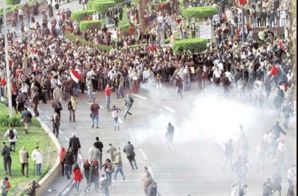 In the early morning today, truncheon-wielding police and plain-clothes thugs waded into the crowd of thousands in Tahrir Square in Cairo behind an enormous volley of tear gas and violently dispersed them.
Today, there is a heavy riot police presence on the streets of Cairo and Alexandria, Egypt's second city, the Interior Ministry issued a statement declaring protests illegal (a bit of overkill since it was already illegal to hold a gathering of more than 5 people in Egypt without official permission), and activists were reporting the arrests of journalists and riot police surrounding the Press Syndicate in Cairo (where an effort was made to resume Tuesday's protests).
 On Tuesday, Egypt's largest protests in a decade -- with large crowds gathering in at least 7 cities to demand the resignation of long-time President Hosni Mubarak -- rattled the regime. So far today, activists report that Twitter service remains blocked in Egypt and in the early afternoon in Egypt, were claiming that Facebook access has also been blocked. That would seem a natural countermove for the Egyptian regime, since much of the online organizing has migrated there, but I haven't confirmed those reports yet.
Egyptian activists are now calling online for another major push against Mubarak and his government on Friday, following afternoon prayers. Between now and then the government will do everything it can to clamp down on organizers and make large protests like Tuesday's impossible.
Meanwhile in Tunisia, the protesters whose spontaneous uprising drove strongman Zine El Abidine Ben Ali from power and into exile earlier this month are finding that securing their gains is a challenge. The protesters' position is that change in Tunisia is purely cosmetic so long as members of Ben Ali's ruling clique remain in power. Most of the senior posts in the interim government, including the prime minister and president, are filled with Ben Ali's erstwhile allies. Al Jazeera reports from Tunis that riot police used tear gas to disperse a crowd of rock throwing protesters and there were "numerous injuries" today.
Note EU-Digest: The United States expressed confidence in Egypt's government on Tuesday and urged calm amid the largest public protests in years. It was an awkward endorsement of an authoritarian regime that is a key Arab ally for Washington. "Our assessment is that the Egyptian government is stable and is looking for ways to respond to the legitimate needs and interests of the Egyptian people," Clinton said.
The office of EU foreign affairs chief Catherine Ashton on Wednesday called on "Egyptian authorities to respect and to protect the right of Egyptian citizen to manifest their political aspirations." Her spokeswoman Maja Kocijancic says Egyptian authorities should "take note of their legitimate wish for political action to deal with the problems that are affecting their daily lives."
For more: A crackdown in Egypt, and Tunisia too - CSMonitor.com
1/25/11
Egyptians, Inspired by Tunisia, Use Facebook to Set Up Protest March Today
On Facebook, more than 85,000 people have pledged to attend a nationwide antigovernment protest planned for today Jan. 25, in Egypt.
Large antigovernment demonstrations broke out in Jordan, Yemen and Algeria, while more men —
particularly in Egypt and Algeria — have joined the ranks of self-immolators inspired by Mohammed Bouazizi, the Tunisian whose suicide sparked that country's revolution. "What is very important about what happened in Tunisia, regardless of whether it spreads, is that it certainly raised a lot of hope among Egyptians and among other Arab people in different countries," explains Hassan Nafaa, a political-science professor at Cairo University and a vocal critic of the regime of President Hosni Mubarak.
Beyond the wave of protests, that hope has found a voice in independent newspapers across the region and in new, audacious political demands made by opposition groups. In Jordan and Yemen, analysts say, verbal attacks by opposition groups show an unprecedented confidence and ferocity, including calls by Jordanian opposition members to have an elected Prime Minister and turn King Abdullah of Jordan's nominally constitutional monarchy into a real one.
For more: Egyptians, Inspired by Tunisia, Use Facebook to Set Up Protest March - TIME
Large antigovernment demonstrations broke out in Jordan, Yemen and Algeria, while more men —
particularly in Egypt and Algeria — have joined the ranks of self-immolators inspired by Mohammed Bouazizi, the Tunisian whose suicide sparked that country's revolution. "What is very important about what happened in Tunisia, regardless of whether it spreads, is that it certainly raised a lot of hope among Egyptians and among other Arab people in different countries," explains Hassan Nafaa, a political-science professor at Cairo University and a vocal critic of the regime of President Hosni Mubarak.
Beyond the wave of protests, that hope has found a voice in independent newspapers across the region and in new, audacious political demands made by opposition groups. In Jordan and Yemen, analysts say, verbal attacks by opposition groups show an unprecedented confidence and ferocity, including calls by Jordanian opposition members to have an elected Prime Minister and turn King Abdullah of Jordan's nominally constitutional monarchy into a real one.
For more: Egyptians, Inspired by Tunisia, Use Facebook to Set Up Protest March - TIME
1/15/11
Saudi Arabia confirms arrival of former Tunisian president (dictator)
Saudi Arabia confirmed Saturday that Tunisia's ousted president and his family have arrived in the kingdom.
"We have welcomed in the Saudi kingdom the arrival of President Zine El Abidine Ben Ali and his family," the office of King Abdullah said in a statement carried by the official SPA news agency.
According to the statement, Ben Ali arrived in Saudi Arabia early Saturday morning after fleeing Tunisia Friday amidst waves of violent protests in the country.
For more: Saudi Arabia confirms arrival of former Tunisian president
1/14/11
Tunisia riots offer warning to Arab governments
Nervous Arab leaders watching young Tunisian demonstrators force an ageing strongman into sweeping concessions are wondering if their own old established formula of political repression will have to change too.
There seems little likelihood that Tunisia's violence will soon spread and unseat autocratic governments from Rabat to Riyadh, partly as opposition movements are weak and demoralized.
No one thinks Tunis is the Arab world's Gdansk, heralding a toppling of dominos of the kind that swept eastern Europe in 1989. Yet some wonder how long the region's unpopular rulers -- from absolute monarchs to ageing revolutionaries clinging to power -- can rely on the hard, old ways to stay in power.
For more: Tunisia riots offer warning to Arab governments | Top News | Reuters
There seems little likelihood that Tunisia's violence will soon spread and unseat autocratic governments from Rabat to Riyadh, partly as opposition movements are weak and demoralized.
No one thinks Tunis is the Arab world's Gdansk, heralding a toppling of dominos of the kind that swept eastern Europe in 1989. Yet some wonder how long the region's unpopular rulers -- from absolute monarchs to ageing revolutionaries clinging to power -- can rely on the hard, old ways to stay in power.
For more: Tunisia riots offer warning to Arab governments | Top News | Reuters
1/13/11
Europe eyes Tunisia on the brink - by Tim Neville
Riots in Tunisia have spread to the country’s capital, pushing the death toll higher and leaving some European observers to believe the regime's days are numbered. The unrest also touched the Swiss capital, Bern, early on Wednesday, when several fire bombs were hurled at the Tunisian embassy. The devices failed to explode, causing minor damage and no injuries.
A Geneva-based support committee for Tunisians distanced itself from the Bern attack and issued a statement “reaffirming its commitment to a peaceful popular uprising”. Anwar Gharbi, committee coordinator, said daily rallies would be held in Geneva to show solidarity with Tunisian protesters.
For more: swissinfo - Swiss foreign affairs
A Geneva-based support committee for Tunisians distanced itself from the Bern attack and issued a statement “reaffirming its commitment to a peaceful popular uprising”. Anwar Gharbi, committee coordinator, said daily rallies would be held in Geneva to show solidarity with Tunisian protesters.
For more: swissinfo - Swiss foreign affairs
Subscribe to:
Posts (Atom)