Advertise On EU-Digest

Annual Advertising Rates
Showing posts with label Civil Unrest. Show all posts

5/31/20

USA Economy:- Civil unrest puts U.S. economy in a vicious circle - by Anna Szymansk

Protests and riots have complex causes, but inequality is clearly acatalyst. From Detroit in 1967 to Los Angeles in 1992, political outrageis often mixed with concerns about economic injustice. Anger inMinneapolis was sparked by long-time concerns about the police’srelationship with the African American community, but the stark economicdivide laid bare by the pandemic may also be playing a role.

Read more at: 
Breakingviews - Civil unrest puts U.S. economy in a vicious circle - Reuters

7/16/16

TURKEY: A Failed Coup, the Return of a Dictator and Civil Unrest - by Vanessa Beeley

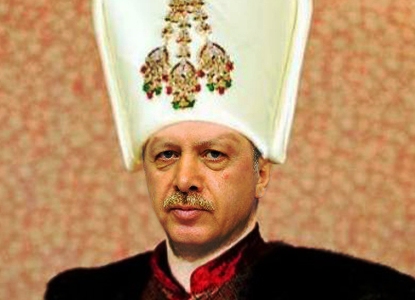
http://www.blazingcatfur.ca/wp-content/uploads/2014/11/Sultan_Erdogan.jpg
Dictator Erdogan: How much longer will Turkey have to suffer?
Early in the morning of July 16, as the world woke up to news of an ongoing coup d’état in Turkey, by a group that identified itself as “Peace in the Country Council,” it was soon clear that the government of President Recep Tayyip Erdoğan would beat back the attempted takeover, which lacked support of the top military brass. 

As early as 7 a.m. IST, it was clear the regime had carried the day.

The coup could to be the handiwork of anti-ISIS soldiers as the regime’s support to the ultra-radical Islamic State and its excessive violence against Kurdish rebels even while peace negotiations were going on with Abdullah Öcalan at Imrali Island, has been the subject of considerable resentment within the ranks of the military. Serving officers have at times spoken their mind on the subject, albeit on condition of anonymity.

However, the Turkish media’s sharp criticism of the Erdogan regime’s support to rebels fighting for regime change in Syria, including a daring (and embarrassing) expose of arms shipments for the rebels, couldn’t have been possible without military inputs. In retrospect, the coup was likely a response to military exasperation with Erdogan’s policies.

Erdoğan himself blamed the followers of US-based scholar Fethullah Gülen for the attempt. While this has yet to be confirmed, it is interesting that the Canada-based politician and Islamic scholar, Tahir-ul Qadri, who launched a futile “Pakistan Spring” against the Nawaz Sharif government in January 2013, has significant connections to Gülen. Both governments being targeted (Turkey, Pakistan) are popularly elected.

The coup failed because it was badly planned; possibly it lacked sufficient support to be effective. Neither the President, vacationing in the southern resort of Marmaris, or Prime Minister Binali Yıldırım, was arrested. Instead, despite the curbs placed by his own regime on the social media,

Erdoğan managed to appeal to the people to resist the coup – they came out on the streets in large numbers, waving Turkish flags, and attacking police, soldiers, and the tanks that rolled out on the streets.

Erdogan managed to land his plane at Istanbul’s Atatürk airport – though tanks were stationed there – and claimed to be fully in charge. The regime survived as top military leaders backed it. Gen. Zekai Aksakalli, commander of the military special forces, took to television to condemn the action and order troops back to the barracks.

By the time the plotters reached and bombed Marmaris, Erdogan had departed. On landing, he said he did not know the whereabouts of Chief of General Staff Gen. Hulusi Akar. However, Turkish National Intelligence spokesperson Nuh Yilmaz informed CNN Turk that the coup attempt had been quashed and that Gen. Hulusi Akar was back in control. The coup began late Friday night with a bomb explosion at Parliament and other places in Ankara, air battles and gunfire across the capital.

While the number of casualties is as yet unknown, 17 policemen were killed in an attack on Gölbaşı Special Forces Department headquarters besides two employees of the Turkish satellite operator TÜRKSTAT.

Observers blamed Erdogan’s increasingly authoritarian rule for the crisis, which saw the exit of former Prime Minister Davutoglu and extremely harsh treatment of dissidents, opposition leaders (taking away the parliamentary immunity of Kurd MPs) and opposition media (Turkey has the highest number of journalists in jail in the ‘free’ world).

The regime has come under international scrutiny for permitting the free flow of jihadis and weapons to rebel groups fighting the government in Syria (the ‘jihad highway’), which resulted in the rise of the brutal insurgent group, Islamic State, which is fast spreading its tentacles worldwide.

The anti-Shia strategy of promoting regime change in Syria and cornering its Iranian ally through (Sunni) Islamic terror backfired when America forced Turkey to take an active role in the US-led coalition against the ISIS. A series of deadly bombings followed on Turkish soil, all attributed to ISIS.
Washington reacted with concern for its ally in the fight against terror.

US Secretary of State John Kerry called Foreign Minister Mevlut Cavusoglu to express Washington’s “absolute support for Turkey’s democratically-elected, civilian government and democratic institutions.” NATO Secretary-General Jens Stoltenberg also spoke to Cavusoglu and called for respect for democracy.

The coup leaders issued a statement late Friday saying they had seized control “to reinstall the constitutional order, democracy, human rights and freedoms, to ensure that the rule of law once again reigns in the country, for law and order to be reinstated.”

Those behind the coup can expect harsh justice, but there is no gainsaying that the regime is safe from another attempt in the future.

A major reason for failure is that coup plotters lacked the resources to grab all vantage points in the capital simultaneously. Turkey’s state-run news agency remained on air and announced that military helicopters had attacked the headquarters of TURKSAT satellite station on the outskirts of Ankara and the Ankara police headquarters. It said tanks were moving toward a palace used by Prime Minister Binali Yıldırım and deputy prime ministers.

A car that tried to stop one of the tanks was rammed through but the occupants escaped.

Erdogan might have escaped death this time, but as one demonstrator said "sooner or later a bullet will catch up with him and deliver Turkey from this dictator ". 

EU-Digest

9/14/13

Turkey 'Looks Vulnerable' as Unrest Flares Up Again

More clashes between protesters and police have put Turkey's social unrest back in the spotlight, following unprecedented steps by the country's central bank to shore up its weakening currency.

Turkish police on Monday fired teargas and water cannons at protesters who tried to enter Gezi Park in Istanbul to protest again at the park's redevelopment– the original source of discontent that led thousands of Turkish people to demand a change of government last month.

But economists warned that further social unrest and unresolved political tensions would not help Turkey's unstable economy and cautious investor landscape.

"Further protests would undoubtedly damage the economy further," Nigel Rendell, senior economic policy adviser at Medley Global Advisors, told CNBC on Tuesday. "I don't think these current protests will get the same ground swell of support as before - the police will take a hard line in response to further protests - but they could certainly damage the economy."

Read More: Turkey 'Looks Vulnerable' as Unrest Flares Again

10/16/12

Swiss army prepares for euro zone unrest - by Matt Clinch

With anti-austerity protests across Europe resulting in civil unrest on the streets of Athens and Madrid, Switzerland -- the European country famed for its neutrality -- is taking unusual precautions.

It launched the military exercise “Stabilo Due” in September to respond to the current instability in Europe and to test the speed at which its army can be dispatched. The country is not a member of the union or among the 17 countries that share the euro.

Swiss newspaper Der Sonntag reported recently that the exercise centered around a risk map created in 2010, where army staff detailed the threat of internal unrest between warring factions as well as the possibility of refugees from Greece, Spain, Italy, France, and Portugal.

According to the minister, some European countries - under pressure to save - didn't renew their armies as they could no longer afford the upkeep of modern systems.
He said that the situation could amplify dramatically, with countries that couldn't defend themselves facing the possibility of “blackmail.” In the paper, he also asked how long the crisis could be calmed with money alone.

Der Sonntag newspaper also reported that army chief André Blattmann is set to submit a proposal in December to utilize four battalions of military police. This will consist of 1,600 soldiers guarding strategic points in the country including the airport, industrial plants, and the international organizations in Geneva.

Read more: Swiss army prepares for euro zone unrest - World News

3/8/11

Oil companies turn off taps in Libya

Global energy markets are facing the lengthy shutdown of Libya’s oil exports as international companies retreat under the weight of sanctions and political chaos.

The violence in Libya comes amid escalating concerns about the political turmoil spreading to the oil-rich Persian Gulf region. Crude prices climbed further Monday as forces loyal to PresidentMoammar Gadhafi attacked rebel positions at the Ras Lanouf oil port, and companies such as Morgan Stanley, Exxon Mobil Corp. and ConocoPhillips Co. have halted trading with the country.

As much as two-thirds of Libya’s 1.6-million-barrel-a-day capacity had already been shut down, and analysts said it will be difficult to maintain any export capacity as political and security conditions deteriorate.

For more: CTV News | Oil companies turn off taps in Libya

In Saudi Arabia, activists push more boldly for reform

With a growing number of Saudi citizens calling for change, the kingdom is turning to old tactics to keep dissent at bay, banning protests, detaining some activists and blocking Web sites carrying petitions for reform.
The sharpest warnings came over the weekend, ahead of a "day of rage" called for Friday. The Interior Ministry said security services would prevent any attempt at disorder, and a government-backed council led by Saudi Arabia's top Muslim cleric issued a statement backing the protest ban.

But the signs of discontent that have emerged here in recent weeks have been notable for their boldness. Some activists say they hope that the uprisings that have toppled Arab leaders in Egypt and Tunisia and left others in the region imperiled will show ordinary Saudis that their royal family also must be held accountable.

For more: In Saudi Arabia, activists push more boldly for reform-washingtonpost

2/3/11

U.N. to evacuate staff from Egypt

A spokesman for the United Nations peacekeeping mission in Cyprus says 350 U.N. staff based in Egypt will be evacuated to the east Mediterranean island or to the United Arab Emirates.

Rolando Gomez said U.N. staff will have the option to fly either to Cyprus or Dubai. He says two U.N. chartered aircraft will each conduct two round-trip flights from Cyprus's Larnaca airport to Cairo on Thursday to ferry staff and their family who opt for the island.

Gomez says arrangements have been made to accommodate up to 600 staff and their dependants at Cyprus hotels.
For more: U.N. to evacuate staff from Egypt - USATODAY.com

10/21/10

France: Violent French Protests Don't Tell Whole Truth - by Elizabeth Palmer

The TV pictures of violent French protests against pension reform don't lie exactly - but they do distort the truth.

Most of the workers opposed to the reforms didn't throw rocks, block fuel depots or overturn vehicles. They marched peacefully, chanting the old slogans of the French Left - a movement which, with most of its members well into middle-age, has grown less radical and a lot more comfortable. In fact, the labor organizers of the Paris march on Tuesday were so anxious to avoid a confrontation that they made a deal with the authorities. At the first sign of violence, all the legitimate union members would disperse - leaving the police to arrest the troublemakers.

Of course, there have been pockets of violent protest - but the balaclava-wearing car-burners in the suburb of Nanterre aren't fighting pension reforms. Their anger has several strands: they don't like President Nicholas Sarkozy; they hate his government's center-right wing policies; and they're legitimately frustrated by high unemployment. Some are just bored.

For more: Violent French Protests Don't Tell Whole Truth - World Watch - CBS News