Looking at 2030, NATO evolution will depend on two main variables. First, whether the international security environment will lean towards a scenario of “aggressive multipolarity”. In this scenario, global and regional powers are engaged in various forms of proxy wars, cyber-attacks, information warfare, and use to put societies of its competitors under pressure by targeting critical infrastructure, energy security, political decision-making, public opinion, etc., without escalating to military conflict – a sort of “peacetime war”. Second, NATO’s future will depend on domestic politics of the Alliance’s major members. US future approach to multilateral alliances will be a determining factor. The two variables are intertwined, and in Europe they further interact with the EU integration process and the path towards greater strategic autonomy in the defence domain. In this context, Italy has to move forward its traditional priorities regarding relations with the US, dialogue and deterrence towards Russia, NATO–EU strategic partnership, and the stabilisation of the “Enlarged Mediterranean” region.
Paper prepared for the webinar “The Future of NATO” jointly organized on 8 October 2020 by Aspen Institute Italia and Istituto Affari Internazionali, in partnership with Real Istituto Elcano and the Italian Ministry of Foreign Affairs and International Cooperation. Published also in Italian: “Il futuro della Nato: l’Alleanza euro-atlantica nella guerra in tempo di pace”.
Read more at:
NATO's Future: Euro-Atlantic Alliance in a Peacetime War | IAI Istituto Affari Internazionali
Showing posts with label Atlantic Alliance. Show all posts
Showing posts with label Atlantic Alliance. Show all posts
12/16/21


12/7/20
EU extends a hand (or two) to Joe Biden – By David M. Herszenhorn
In a sign of just how eager Brussels is to move past the acrimony created by President Donald Trump, the European Commission and Council have put forward competing policy papers outlining how they would like the EU to team up with the new U.S. administration on a wide array of policy issues.
Read more at: EU extends a hand (or two) to Joe Biden – POLITICO
Read more at: EU extends a hand (or two) to Joe Biden – POLITICO
12/3/20
EU-US ‘tech alliance’ faces major obstacles on tax, digital rules – by Mark Scott and Laurens Cerulus
With the Trump era quickly winding down, Europe and the United States are eager to rekindle the transatlantic relationship, and Brussels wants to refocus on tech.
But the EU capital may not find its enthusiasm reciprocated in Washington D.C.
Read more at: https://www.politico.eu/article/eu-to-us-president-elect-joe-biden-lets-be-tech-allies/
But the EU capital may not find its enthusiasm reciprocated in Washington D.C.
Read more at: https://www.politico.eu/article/eu-to-us-president-elect-joe-biden-lets-be-tech-allies/
2/26/20
‘2020 Munich Security Conference: Westlessness’: Shaping Anew the EU’s Power - by Shamsa Nawaz
The endurance of a political order cannot be permanently measured in the absence of any instrument, neither can it be substantially responded to at any given point and time. Similarly, the collapse of a system does not require any clear or prolonged warning. The world has experienced a relatively stable bi-polar system for several decades in the post-Cold War era, gradually replaced by the US dominated neoliberal post-Cold War era which is now being succeeded by a multi-polar world. This is accompanied with shifting alignments.
In the same vein, the debates at the 2020 Munich Security Conference (MSC) provided new insights into the shifts currently underway within the EU.In the most expansive sense of that term: ‘Westlessness’ reigned throughout the MSC despite the fact that it had played a vital role in world affairs after World War II. Earlier, marking the seventy fifth anniversary of the end of the World War II,
Frank-Walter Steinmeier, President of Germany, warned that the erosion of international cooperation was evident in the US’s growing interest in Asia at the expense of its transatlantic relations. Will Europe come up more integrated in this shifted paradigm? How would a more sovereign Europe become a better partner to a more socially equal United States on global problems? The technological giants have also disrupted major economies, societies, and political systems.
Historically, Germany as a core EU country has been the largest and most successful economy with a gdp of almost $4 trillion under Angela Merkel, since 2005. Germany sends the most members to the European Parliament. It has efficaciously maintained stability during the euro crisis, the Russian invasion of eastern Ukraine in 2014 and her open-door policy of 2015, in which over 1 million refugees were given shelter in Germany, was built on those premises. Germany provided an example of how to deal with a difficult past.
However, using the legacy of the Holocaust, Germany has craftily absolved itself from the responsibility of security, defense, and leadership precisely. Will it continue to be the same in the post-Brexit paradigm? Steinmeier warned that, “if the European project fails, the lessons of German history will be called into question.”
Within Germany, the ever-growing popularity of the far-right, anti-immigration, and anti-Semitic Alternative for Germany (AfD) has remained increasingly cumbersome for Angela Merkel. It is creating a leadership crisis for Germany. On February 10, 2020, Annegret Kramp-Karrenbauer, as Merkel’s designated successor has also resigned as a leader of the governing Christian Democratic Union (CDU) party. This leadership crisis has emerged at xenophobic times of nationalism and populism espoused with the state of anomie, in Europe. The strains in the transatlantic relations and the rise in China’s global role have afflicted this specter further afield.
Speaking pronouncedly, the French President Emmanuel Macron also talks about the need for a more integrated Europe by exercising responsibility for Europe’s future. “This united Europe will only survive if we regard it as the most concrete repository for German responsibility . . . of all the dangers I sense facing Germany, I see none greater than that our German narrative of the future dispenses with the united Europe, whether as a result of a lack of insight, because of indifference, or in some people’s eyes even through intent.”
The panacea lies in strengthening European security and defense policy as suggested by Steinmeier. He however, distinctively speculated that it would be opposed by the Central and Eastern Europeans. Besides, the fear is that Europe is no longer relevant for the US in great power competition. “Only a Europe that can and wants to protect itself credibly will be able to keep the U.S. in the alliance,” was a major concern of Steinmeier.
Already, the “Global Strategy for the European Union’s Foreign and Security Policy” presented by HR/VP Mogherini in June 2016, had laid down the foundations for a comprehensive package of measures in the areas of security and defence. It consists of three major pillars:
a) New political goals and ambitions for Europeans to take more responsibility for their own security and defence.
B) New financial tools to help Member States and the European defence industry to develop defence capabilities (“European Defence Action Plan”).
C) Set of concrete actions as a follow up to the EU-NATO Joint Declaration while identifying areas of cooperation.
Note EU-Digest: The EU membership states who are calling for a more populist and nationalistic approach must stop kidding themselves that leaving the EU can provide them even with the slightest hope of independent survival, in the world of political and economic Power Blocs. They will be eaten alive and forced to swallow the worst possible demands, as they negotiate trade agreements with power blocs like the US or China.
Read the complete report at: ‘Westlessness’: Shaping Anew the EU’s Power - Modern Diplomacy
11/26/19
EU-US Relations On Life Support: Donald Trump has dragged America's global reputation to an all-time low: by Simon Tisdall
 |
| Atlantic Alliance On Life Support |
It is hard to overstate how badly Trump has hurt America’s worldwide reputation. US presidents have been internationally unpopular before – George W Bush over Iraq, for example, or LBJ over Vietnam. But Trump has sunk to an all-time low.
Opinion surveys reveal the negative impact on US global standing. A 25-nation Pew survey last year found, overall, that 70% of respondents had no confidence in Trump’s leadership. While a majority still held a favourable view of the US, unfavourable views were up sharply from the Obama era. About 70% said the US under Trump did not take sufficient account of the interests of other countries and was doing less to address international problems.
Trump won’t be around forever. But this collapse in trust may have lasting, long-term implications for transatlantic ties. A survey of 60,000 people in 14 EU member states published this fall by the European Council on Foreign Relations found most Europeans “no longer believe the US can serve as a guarantor of their security”. Europe and America risk drifting even further apart in 2020.
Not all this angst can be laid at Trump’s door. But his personal hostility to the EU and individual European leaders, his denigration of Nato, his bypassing of his own intelligence agencies and state department, his collaboration with Russia’s Vladimir Putin, and his willingness to betray staunch allies such as Syria’s Kurds are undoubtedly stoking fears about US reliability in security matters. Trump’s hope of scoring a big pre-election foreign policy “success” adds to the general nervousness.
Some of these fears are structural. Europeans, including Britons, are alarmed by Trump’s disdain for the UN and other multilateral decision-making bodies, and his readiness to ignore international treaties. His go-it-alone chauvinism weakens US leverage. It also shows ingrained disrespect for the global rules-based order that has sustained western liberal democracy in the postwar era.
Trump’s admiration for authoritarian regimes and “strongman” leaders such as Putin and China’s Xi Jinping, when set alongside his electoral shenanigans at home, has strengthened the view that he is no friend to democracy – at a time when democracies everywhere are under sustained attack.
The US under Trump’s baleful tutelage is not only losing influence and respect. It is also, increasingly, a source of and contributor to global woes and instabilities. His unilateral, nationalistic, self-defeating approach threatens deepening trouble across the board next year.
Read more at: Donald Trump has dragged America's global reputation to an all-time low | Simon Tisdall | Opinion | The Guardian
10/9/19
Crumbling Apart - the Atlantic Alliance: How Boeing vs. Airbus Became Trump vs. Europe - by David Gelles
 |
| Donald Trump retaliates against Europe |
But Boeing wanted something from Mr. Trump, too.
During
a private conversation at the event, Boeing’s chief executive, Dennis
A. Muilenburg, talked to Mr. Trump about a long-running trade dispute
between the United States and the European Union that had its roots in
the pitched rivalry between Boeing and Airbus, according to three people
familiar with the meeting, who spoke on the condition of anonymity to
discuss a delicate matter.
The case,
which centered on subsidies that Europe provides Airbus, had been
working its way through the World Trade Organization for years, but an
end was finally in sight. In the event that it was settled on Mr.
Trump’s watch, Mr. Muilenburg urged the president to enforce the ruling,
which would mean levying tariffs on European goods.
On
Wednesday, Boeing got its wish. After an announcement by the World
Trade Organization, the Trump administration said it would tax as much as $7.5 billion of European exports annually.
Read more at: How Boeing vs. Airbus Became Trump vs. Europe - The New York Times
8/20/18
EU-US Relations: Why Trump wants to break up the European Union - by Andrew Hammond
At the heart of this diplomatic discord is Mr. Trump’s disdain for the
European Union, which goes significantly beyond that of any president
since the bloc’s establishment. While he has concerns with Europe’s low
levels of defence spending vis-a-vis Washington, it is on the economic
front that the Brussels-based club is the deepest source of frustration
for him with its large goods surplus with the United States.
Mr. Trump tweeted that: “Tariffs are the greatest! Either a country which has treated the United States unfairly on Trade negotiates a fair deal, or it gets hit with Tariffs. It’s as simple as that – and everybody’s talking. Remember, we are the ‘piggy bank’ that’s being robbed.”
This latest tweet builds on remarks recently from Mr. Trump when he remarkably declared, “I think the EU is a foe, what they do to us [the United States] in trade.” While some have dismissed this remark as just another spur-of-the-moment presidential outburst, Anthony Gardner – who served as U.S. ambassador to the European Union under Barack Obama – has warned that, “Europe wake-up; the U.S. wants to break-up the EU. Remember Belgium’s motto L’Union Fait la Force (Unity creates strength).”
The contrast between Mr. Trump, with his calls for more “Brexits” within the European Union, and U.S. policy at the start of the European integration process could not be starker. Embodied in John Kennedy’s 1962 Atlantic Partnership speech, the core U.S. view then was that a united Europe would make future wars on the continent less likely; create a stronger partner for the United States in meeting the challenges posed by the Soviet Union; and offer a more vibrant market for building transatlantic prosperity. Yet, U.S. attitudes gradually became more ambivalent as integration deepened, particularly in recent Republican administrations.
In the economic arena, for instance, the drive toward the European Single Market led to U.S. concerns about whether this would evolve into a “Fortress Europe.” Similarly, the creation of the European Monetary Union prompted worries about the dilution of U.S. primacy in the financial sector and macroeconomic policy. Moreover, in competition policy, the increasing assertiveness of the European Commission has raised U.S. concerns about EU overreach. Only last week, for example, Mr. Trump tweeted “The EU just slapped a Five Billion Dollar fine on one of our great companies, Google. They truly have taken advantage of the US, but not for long!”
Before Mr. Trump, the administration of George W. Bush came closest to questioning the value of European integration. For instance, the controversy over the Iraq conflict saw Washington querying the benefits of EU collaboration in the security and defence arena. On the eve of the NATO defence review in 2003, U.S. defence secretary Donald Rumsfeld even drew a distinction between “old” and “new Europe” with the latter perceived as more favourable to U.S. interests.
However, while the Bush team eventually recognized the need to draw back from this approach, it appears Mr. Trump may not be willing to do the same and has indeed raised the rhetoric several notches. In so doing, one of the features of the President’s approach is an attempt to prise apart Germany and France, the traditional two motors of EU integration. In May, it is reported that Mr. Trump advised French President Emmanuel Macron, who he appears to hold in high regard, that France would be better to quit the European Union to get a better trade deal with Washington than the United States is willing to offer the European Union as a whole.
This remarkable suggestion comes in the context of the U.S. President’s denunciation of Germany, which he has called “very bad” because of its significant trade surplus with the United States. While the White House’s gambit in trying to split Germany and France is unlikely to succeed, it underlines how U.S. ambivalence about European integration has reached its apotheosis under Mr. Trump. The scale of the challenge facing Mr. Juncker is therefore huge, given that this is the first U.S. president who appears to want to not just weaken, but also splinter the Brussels-based club.
Note EU-Digest: There is a cold wind blowing towards Europe from Washington, and a definite shift of policy vis-a-vis the EU. The EU Commission and EU parliament better wise up to the fact, that in dealing with the US, it is not business as usual.
EU-Digest
7/16/18
1/10/18
EU-US Relations: America’s Relationship With Europe: Collateral Damage if Trump Kills the Iran Deal - by Trita Parsi
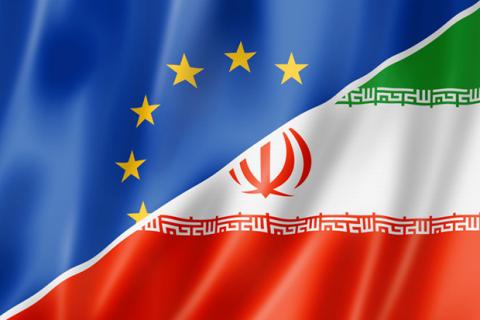 |
| Iran Nuclear deal as Atlantic Alliance Crumbles |
Many drew a sigh of relief back in December as the congressional deadline to impose new sanctions on Iran passed. The nuclear deal had survived another challenge, they thought. But the celebrations were premature. Trump can kill the deal this week by simply doing nothing. We’ve seen this movie before—but this time America’s relationship with Europe is at the center of the drama.
Every 120 to 180 days, the United States is obliged to renew sanctions waivers under the nuclear deal. Failing to do so would put the U.S. in violation of the agreement and likely spark retaliatory measures by Tehran that could see the entire initiative fall apart. Every time the waivers have been up for renewal, fears have risen that Trump will quit the deal simply by doing nothing.
This time around, though, it’s particularly worrisome. Trump punted the nuclear question to Congress last October by failing to certify it. This triggered a process that gave Congress 60 days to pass new sanctions on Iran or “fix” the deal through other measures. If it failed to do so, Trump promised he would “terminate” the agreement. The protests in Iran, which Trump sees himself as a champion of, have made a confrontational position towards the Iranian regime all the more likely.
But this time around, the survival of the nuclear deal is no longer just about Iran’s centrifuges and sunset clauses. It’s about whether the EU will see the U.S. as a pillar of the liberal international order or as a fifth column seeking the it’s demise. The nuclear deal has become the latest, and perhaps most consequential, international agreement or norm that the EU seeks to uphold and Trump seeks to tear down: from the Paris agreement, to the future of NATO, to the unity of the EU, to the funding of the United Nations, to the status of Jerusalem.
To Europe, two new realities have become clear. First, if the EU acquiesces on the nuclear deal, Trump will move on to target another agreement, and then another, and then another, until the very foundation of the current international order is uprooted. This will eventually force the EU to draw a line in the sand and stand up to Trump. Logic then dictates the longer the EU waits, the more damage Trump will do before he’s stopped. Hence, the EU is better off taking its stand at the Iran deal than waiting for it to be scrapped and emboldening Trump further.
Thus, EU policy chief Federica Mogherini said in mid-December that preserving and implementing the 2015 nuclear deal with Iran is “an absolute must,” in one of her sharpest criticisms of Trump’s Iran position. “We cannot afford to undermine the credibility of a multilateral agreement, endorsed by the UN Security Council Resolution,” she added.
Europe’s second realization is more ominous: Trump is not an anomaly. He may be a political outsider, but he is not an outsider to America. His presidency is the manifestation of a deep-seated sentiment in the United States that existed long before Trump entered the political arena and which will continue to exist—if not dominate politically—long after he departs. As such, neither electoral defeat nor impeachment will be enough to restore American “normalcy” because Trump is very much a part of the new “American normal.”
Germany’s Gabriel gave the clearest hints as to Europe’s new thinking last month. While he urged the Trump administration to “help develop joint strategies that preserve both the liberal international order and a global trade system that rests on a foundation of freedom, fairness, human rights and the rule of law,” he was also clear-eyed that to the U.S., the world is no longer a “global community, but rather an arena in which nations, non-state actors and corporations fight to gain advantage.”
As such, the U.S. is “no longer responsible for underpinning the structure and dome of this arena. Rather, it is one of the combatants on its sandy floor.” This leaves the EU with no choice but to chart its own way rather than submitting to American diktats—particularly on the issue of killing the Iran deal, which Gabriel said would “jeopardize” the security of the European Union.
Trump may see an irreparable break with the EU as a bonus of jettisoning the nuclear agreement. But by putting the U.S.-EU axis at risk, even the most die-hard opponents of the deal should know that they may get more than they ever bargained for.
Read moire: America’s Relationship With Europe: Collateral Damage if Trump Kills the Iran Deal | The American Conservative
5/30/17
Germany: Trump's anti-German stance is stupid and dangerous-by Fred Kaplan
The fallout from President Trump’s disastrous trip to Europe
continues to poison the trans-Atlantic climate. His comments about
Germany have been particularly toxic—and, beyond that, stupid,
reflecting no understanding of the country’s strategic importance or its
dreadful history.
Chancellor Angela Merkel stated the matter plainly in a speech on Sunday in Bavaria. Europeans “must take our fate into our own hands,” she said, because the “times in which we could rely fully on others … are somewhat over.” This, she added, “is what I experienced in the last few days”—a reference to Trump’s behavior in Brussels and Rome, where, among other bits of rudeness, he declined to pay even lip service to the pledge, enshrined in Article 5 of the North Atlantic Treaty, that the United States would defend any member of NATO that comes under attack.
As if in piqued response, Trump tweeted on Tuesday, “We have a MASSIVE trade deficit with Germany, plus they pay FAR LESS than they should on NATO and military. Very bad for U.S. This will change.” While overseas, Trump had reportedly told Jean-Claude Juncker, president of the European Union, “The Germans are bad, very bad. Look at the millions of cars that they’re selling in the USA. Horrible. We’re gonna stop that.” Press Secretary Sean Spicer denied the report, which appeared in Der Spiegel, but Trump’s Tuesday tweet undercut the denial and underscored his complaint. It wasn’t some loose remark, he seemed to be saying; he meant it.
But Trump’s ire is misplaced or unwise on several levels.
First, yes, Americans buy a lot of German cars, but this isn’t because
Germany is dumping BMWs and Volkswagens on the U.S. market; it’s because
a lot of Americans like those cars. Second, as my colleague Daniel Gross
has pointed out, lots of those German cars are made in the United
States; a BMW plant in South Carolina—the company’s biggest plant in the
world—churns out 400,000 cars a year.
The thing is, Trump knows this. When Merkel visited Washington in March, she brought along the CEOs of BMW, Siemens, and Schaeffler, an industrial-parts manufacturer, who met with Trump for an hour, briefing him on their $300 billion investment in the American economy and the 750,000 American jobs that their plants had created. By all accounts, Trump was impressed.
Perhaps the most wondrous thing about the world that took form after World War II has been the absence of war between the longstanding rivals in Europe—not just the absence of wars but the disappearance of the notion that European wars were inevitable. This feat didn’t come about by some miracle or accident. It was the result of painstaking effort to build an alliance based on shared values and common interests, requiring trillions of dollars in aid and investment, the maintenance of massive military bases, and—in particularly trying times—a crisis or two that risked another, far more cataclysmic war. It is this alliance—and the international order on which it stands—that Trump’s tantrums and indifference are endangering.
European leaders realized last week (you could see it on their faces as they watched Trump speak)—that the alliance will be in some degree of abeyance as long as this guy is president.
It may be no coincidence that Russian President Vladimir Putin’s chief foreign-policy goal is to restore the old Soviet Union. He can do that only if the European Union is weakened and the ties between the United States and Europe are severed. He may have reason to believe that his dream might come true. Whatever the probes reveal about Trump’s ties or obligations (or lack of any connections whatever) to Russia, his signs of indifference to the fate of Europe are no doubt causing Putin to salivate more than he thought he ever would.
Read more: Trump's anti-German stance is stupid and dangThe thing is, Trump knows this. When Merkel visited Washington in March, she brought along the CEOs of BMW, Siemens, and Schaeffler, an industrial-parts manufacturer, who met with Trump for an hour, briefing him on their $300 billion investment in the American economy and the 750,000 American jobs that their plants had created. By all accounts, Trump was impressed.
Perhaps the most wondrous thing about the world that took form after World War II has been the absence of war between the longstanding rivals in Europe—not just the absence of wars but the disappearance of the notion that European wars were inevitable. This feat didn’t come about by some miracle or accident. It was the result of painstaking effort to build an alliance based on shared values and common interests, requiring trillions of dollars in aid and investment, the maintenance of massive military bases, and—in particularly trying times—a crisis or two that risked another, far more cataclysmic war. It is this alliance—and the international order on which it stands—that Trump’s tantrums and indifference are endangering.
European leaders realized last week (you could see it on their faces as they watched Trump speak)—that the alliance will be in some degree of abeyance as long as this guy is president.
It may be no coincidence that Russian President Vladimir Putin’s chief foreign-policy goal is to restore the old Soviet Union. He can do that only if the European Union is weakened and the ties between the United States and Europe are severed. He may have reason to believe that his dream might come true. Whatever the probes reveal about Trump’s ties or obligations (or lack of any connections whatever) to Russia, his signs of indifference to the fate of Europe are no doubt causing Putin to salivate more than he thought he ever would.
11/25/16
The Atlantic Alliance: EU, when will we wake up and smell the roses when it comes to dealing with our US partner?
 |
| No Es Mi Culpa- it is not my fault |
Perhaps, but two professors who have conducted exhaustive research to try to present data-driven support for this conclusion explain it this way:
Multivariate analysis indicates that economic elites and organised groups representing business interests have substantial independent impacts on US government policy, while average citizens and mass-based interest groups have little or no independent influence.
In English: the wealthy few move policy, while the average American has little power.
The two professors came to this conclusion after reviewing answers to 1,779 survey questions asked between 1981 and 2002 on public policy issues. They broke the responses down by income level, and then determined how often certain income levels and organised interest groups saw their policy preferences enacted.
"A proposed policy change with low support among economically elite Americans (one-out-of-five in favour) is adopted only about 18% of the time," they write, "while a proposed change with high support (four-out-of-five in favour) is adopted about 45% of the time."
On the other hand:
When a majority of citizens disagrees with economic elites and/or with organised interests, they generally lose. Moreover, because of the strong status quo bias built into the US political system, even when fairly large majorities of Americans favour policy change, they generally do not get it.
They concluded:
Americans do enjoy many features central to democratic governance, such as regular elections, freedom of speech and association and a widespread (if still contested) franchise. But we believe that if policymaking is dominated by powerful business organisations and a small number of affluent Americans, then America's claims to being a democratic society are seriously threatened.
Eric Zuess, writing in Counterpunch, isn't surprised by the survey's results.
"American democracy is a sham, no matter how much it's pumped by the oligarchs who run the country (and who control the nation's "news" media)," he writes. "The US, in other words, is basically similar to Russia or most other dubious 'electoral' 'democratic' countries. We weren't formerly, but we clearly are now."
This is the "Duh Report", says Death and Taxes magazine's Robyn Pennacchia. Maybe, she writes, Americans should just accept their fate.
"Perhaps we ought to suck it up, admit we have a "classist society" and do like England where we have a House of Lords and a House of Commoners," she writes, "instead of pretending as though we all have some kind of equal opportunity here."
All the recent wars, where we Europeans so faithfully followed the US in, either independently, or through the NATO which has outlived its time and purpose; Afghanistan, Iraq, and now Syria. They have a;; been a complete failure.
And now: The election of Donald Trump raises squarely the question of values, soft power, what do we in Europe stand for and how will we behave - moral and ethics? So far Europe and the U.S. have seen eye to eye, but will that continue to be the case? What kind of America will we see? Will Europe have to bend its values to maintain the U.S military umbrella, and if it does what kind of Europe will emerge?
How can the U.S. and Europe do things together if they differ fundamentally on what they stand for?
And why should we?
Yes indeed, Europe needs to smell the roses and act far more independently when it comes to dealing with it's US partner.
EU-Digest
11/13/16
EU-US Relations: British, French ministers snub EU talks on Trump and future US relations
 |
| EU In Panic: "what to do with the bogeyman from the USA" |
European Union foreign policy chief Federica Mogherini summoned the ministers for dinner in Brussels after Republican Trump stormed to victory over Democrat Hillary Clinton on a platform which questioned America's commitment to Europe.
But British Foreign Minister Boris Johnson will not attend the meeting which is seen in some quarters as unnecessarily casting doubt on the result of an election in the country that has been closely allied to Europe for decades.
"We do not see the need for an additional meeting on Sunday because the US election timetable is long established," a British Foreign Office spokesman said, adding that Johnson would attend a scheduled full meeting of ministers on Monday.
"An act of democracy has taken place, there is a transition period and we will work with the current and future administrations to ensure the best outcomes for Britain."
Britain will be seeking the incoming Trump administration's backing as it negotiates its exit from the EU following June's Brexit referendum vote.
French Foreign Minister Jean-Marc Ayrault will meanwhile be "absent for agenda reasons", a French source told AFP, although his absence from a crucial meeting called by the EU's own foreign policy chief will also raise questions.
Britain and France will instead be represented by their ambassadors to the EU.
Trump's victory has already been greeted coolly by a bloc shaken by Brexit and other crises, with European Commission chief Jean-Claude Juncker warning the billionaire president-elect he must get up to speed quickly on transatlantic ties.
"Mr Trump, during his campaign, said that Belgium was a village somewhere in Europe," Juncker said Friday. "I believe we'll have two years of wasted time while Mr Trump tours a world he doesn't know."
Note EU-Digest: Why all this panic in Europe about this clown who became president elect of the USA? Maybe this will finally give EU member states the courage to jump off the lap of the US, create its own independent foreign policy and army, get out of the Middle East Political disaster, tell Erdogan to forget about membership witthin the EU, if he does not reestablish Democracy in Turkey, and realize that Russia is not Europe's principal adversary.. That would make most people proud about the EU.
Read more: Flash - British, French ministers snub EU talks on Trump - France 24
2/20/16
US Presidential Elections:US candidates ignore Europe at their peril - by Leonid Bershidsky
In stump speeches and debates, the US presidential candidates only
bring up Europe to make domestic political points or highlight the
dangers of Daesh (the self-proclaimed Islamic State of Iraq and the
Levant) terrorism or immigration. But ignoring the other major part of
what is commonly known as “the West” is a mistake.
If European countries are mentioned at all on the campaign trail, it is in passing. Former US secretary of state Hillary Clinton says that “only China, Germany and the US” can be the sustainable energy power of the future, and she wants it to be the US. Vermont Senator Bernie Sanders, her Democratic rival, says Germany offers free university education to its citizens, so the US can afford it, too.
Among Republican contenders, Florida Senator Marco Rubio mocks Sanders by saying that the self-described socialist should be running for office in one of the Scandinavian countries. In an early debate, former Florida governor Jeb Bush made a quip about French working hours to highlight Rubio’s spotty attendance record in the Senate, then had to apologise for the remark. Billionaire Donald Trump likes to say that France has the “toughest gun laws in the world”, which failed to prevent the terror attacks in Paris last year. He also has called Brussels “a hellhole” because of its large immigrant population.
That’s pretty much it. Electioneering, of course, is mainly about domestic issues. But it would be wrong to assume that foreign policy doesn’t matter in the 2016 election. One reason that former surgeon Ben Carson, one of the early Republican front-runners, has plummeted in the polls is that he’s been incoherent and gaffe-prone on foreign policy. Sanders is criticised for having a limited understanding of the topic, especially compared with Clinton.
No candidate debate goes without at least some discussion of international issues. The threat from Daesh is the dominant one. Then there’s Iran: The more hardline Republican candidates denounce the accord reached by the Obama administration and demand a tougher stand. Texas Senator Ted Cruz sums up the position in stump speeches: “If someone says they want to kill you, believe them.” It never fails to get a laugh.
These days, European leaders get the impression that even the Obama administration is uninterested in their problems.
Yet it is imperative for the US to show a lot of goodwill toward Europe. It is in its vital interests to keep the European Union together and ensure its success.
The EU is the biggest US trading partner, with three times as much US investment as all of Asia. If it fell apart, the economic effect on the US would be immediate. Among other things, individual European countries would be free to engage in a cut-throat tax competition, creating a sucking sound for US companies the likes of which no protectionist can imagine.
The success of the European integration project is essential to the peaceful existence of the western world, which the US claims to lead. That leadership would lose its meaning if Europe were to disintegrate into smaller, self-interested parts. That would be a disaster, not a reason for Schadenfreude and not one of those “European issues” the presidential candidates like to ignore. ( Bloomberg)
Insure-Digest
2/15/16
Europe's Convinced U.S. Won't Solve Its Problems - Josh Rogin
Europe is facing a convergence of the worst crises since World War
II, and the overwhelming consensus among officials and experts here is
that the U.S. no longer has the will or the ability to play an
influential role in solving them.
At the Munich Security Conference, the prime topics are the refugee crisis, the Syrian conflict, Russian aggression and the potential dissolution of the European Union's very structure. Top European leaders repeatedly lamented that 2015 saw all of Europe’s problems deepen, and unanimously predicted that in 2016 they would get even worse.
“The question of war and peace has returned to the continent,” German Foreign Minister Frank-Walter Steinmeier told the audience, indirectly referring to Russian military interventions. “We had thought that peace had returned to Europe for good."
What was missing from the conference speeches and even the many
private discussions in the hallways, compared to previous years, was
the discussion of what Europe wanted or even expected the U.S. to do.
Several European officials told me that there was little expectation that President Barack Obama, in his last year in office, would make any significant policy changes to address what European governments see an existential set of crises that can’t wait for a new administration in Washington.
“There’s a shared assessment that the European security architecture is falling apart in many ways,” said Camille Grand, director of the Foundation for Strategic Research in Paris. “There is a growing sense that this U.S. administration is focused on establishing a legacy on what has already been achieved rather than trying to achieve anything more. Yet the problems can get much worse.”
During the first day of the conference, the U.S. role in Europe was hardly mentioned in the public sessions. In the private sessions, many participants told me that European governments are not only resigned to a lack of American assertiveness, they also are now reluctantly accepting a Russia that is more present than ever in European affairs, and not for the better.
“There’s not a lot of talk about how the United States can be part of the solution. We seem to be disappearing from their calculations,” said Walter Russell Mead, a historian with the Hudson Institute. “From the European standpoint, Putin has become somebody that like it or not that they have to deal with.”
On Saturday, Secretary of State John Kerry gave a speech filled with optimism about the future of Europe and the trans-Atlantic alliance. He sought to assuage concerns about American withdrawal from the region and paint the current state of affairs in a positive light.
“We know many Europeans right now feel overwhelmed by the latest round of challenges,” he said. “I want to express the confidence of President Obama and all of us in America that, just as it has so many times before, Europe is going to emerge stronger than ever, provided it stays united and builds common responses to these challenges … We are going to do just fine.”
Many in the audience noted that Kerry has little leverage with which to pressure Russia to abide by any cease-fire. There’s little faith among European officials I spoke with that Russia has any plan to end the fighting, unless it is on Moscow's own terms. Lavrov spoke after Kerry and reiterated that Russia would continue to bomb the "terrorists” in Syria, and that Russia’s view of “terrorists” was expansive.
“Kerry is coming in there telling them this is what he hopes they will do, without having a way to elicit a response to them,” said Mead. “That looks like a negotiation, but that’s not actually a negotiation.”
Derek Chollet, who served in the Obama administration from 2009 until last year, told me the White House believes that while the U.S. should stay committed to European security, it is the Europeans who will have to do more to solve their problems.
“It’s a false choice to say either America solves every problem or the problems don’t get solved,” he said. “All of our allies for justifiable reasons want more of the United States, but more of everything is not a strategy.”
In a world of limited resources, according to Chollet, the Obama administration is seeking a way to balance several competing strategic interests and manage the related trade-offs.
“You can put together a long list of individual things you could do more of, but when you add all that up it’s not a sustainable strategy,” he said. “We are not going to solve the European Union’s problems for them.”
That view is not universally held inside the U.S. government. There are officials in the State Department, the U.S. military, and especially in Congress who believe the administration should be doing much more. For example, some support giving arms to the Ukrainian military, establishing safe zones inside Syria, giving the Syrian rebels advanced weaponry to defend themselves, and doing more to remove Assad from power.
In fact, at different times Kerry has supported every one of these policies, but has repeatedly been rebuffed by the White House. Based on his speech, we can conclude he has now come to the same conclusion as European leaders: Obama is not going to drastically change his policies before he leaves office.
For Europe, that might be too long to wait.
Note EU-Digest - Indeed, Europe needs to solve its own problems, but disunity is not the answer to solving any problems. Unity and a stronger united EU is the only answer. If Europe continues to choose for" individual nationalistic acts", every country will eventually be gobbled up - one by one- by forces far bigger than them.
Read more: Europe's Convinced U.S. Won't Solve Its Problems - Bloomberg View
At the Munich Security Conference, the prime topics are the refugee crisis, the Syrian conflict, Russian aggression and the potential dissolution of the European Union's very structure. Top European leaders repeatedly lamented that 2015 saw all of Europe’s problems deepen, and unanimously predicted that in 2016 they would get even worse.
“The question of war and peace has returned to the continent,” German Foreign Minister Frank-Walter Steinmeier told the audience, indirectly referring to Russian military interventions. “We had thought that peace had returned to Europe for good."
Several European officials told me that there was little expectation that President Barack Obama, in his last year in office, would make any significant policy changes to address what European governments see an existential set of crises that can’t wait for a new administration in Washington.
“There’s a shared assessment that the European security architecture is falling apart in many ways,” said Camille Grand, director of the Foundation for Strategic Research in Paris. “There is a growing sense that this U.S. administration is focused on establishing a legacy on what has already been achieved rather than trying to achieve anything more. Yet the problems can get much worse.”
During the first day of the conference, the U.S. role in Europe was hardly mentioned in the public sessions. In the private sessions, many participants told me that European governments are not only resigned to a lack of American assertiveness, they also are now reluctantly accepting a Russia that is more present than ever in European affairs, and not for the better.
“There’s not a lot of talk about how the United States can be part of the solution. We seem to be disappearing from their calculations,” said Walter Russell Mead, a historian with the Hudson Institute. “From the European standpoint, Putin has become somebody that like it or not that they have to deal with.”
On Saturday, Secretary of State John Kerry gave a speech filled with optimism about the future of Europe and the trans-Atlantic alliance. He sought to assuage concerns about American withdrawal from the region and paint the current state of affairs in a positive light.
“We know many Europeans right now feel overwhelmed by the latest round of challenges,” he said. “I want to express the confidence of President Obama and all of us in America that, just as it has so many times before, Europe is going to emerge stronger than ever, provided it stays united and builds common responses to these challenges … We are going to do just fine.”
Many in the audience noted that Kerry has little leverage with which to pressure Russia to abide by any cease-fire. There’s little faith among European officials I spoke with that Russia has any plan to end the fighting, unless it is on Moscow's own terms. Lavrov spoke after Kerry and reiterated that Russia would continue to bomb the "terrorists” in Syria, and that Russia’s view of “terrorists” was expansive.
“Kerry is coming in there telling them this is what he hopes they will do, without having a way to elicit a response to them,” said Mead. “That looks like a negotiation, but that’s not actually a negotiation.”
Derek Chollet, who served in the Obama administration from 2009 until last year, told me the White House believes that while the U.S. should stay committed to European security, it is the Europeans who will have to do more to solve their problems.
“It’s a false choice to say either America solves every problem or the problems don’t get solved,” he said. “All of our allies for justifiable reasons want more of the United States, but more of everything is not a strategy.”
In a world of limited resources, according to Chollet, the Obama administration is seeking a way to balance several competing strategic interests and manage the related trade-offs.
“You can put together a long list of individual things you could do more of, but when you add all that up it’s not a sustainable strategy,” he said. “We are not going to solve the European Union’s problems for them.”
That view is not universally held inside the U.S. government. There are officials in the State Department, the U.S. military, and especially in Congress who believe the administration should be doing much more. For example, some support giving arms to the Ukrainian military, establishing safe zones inside Syria, giving the Syrian rebels advanced weaponry to defend themselves, and doing more to remove Assad from power.
In fact, at different times Kerry has supported every one of these policies, but has repeatedly been rebuffed by the White House. Based on his speech, we can conclude he has now come to the same conclusion as European leaders: Obama is not going to drastically change his policies before he leaves office.
For Europe, that might be too long to wait.
Note EU-Digest - Indeed, Europe needs to solve its own problems, but disunity is not the answer to solving any problems. Unity and a stronger united EU is the only answer. If Europe continues to choose for" individual nationalistic acts", every country will eventually be gobbled up - one by one- by forces far bigger than them.
Read more: Europe's Convinced U.S. Won't Solve Its Problems - Bloomberg View
1/16/16
EU-US Partnership: "The EU is increasingly unreliable and unpredictable" - by George Friedman
 |
| European Unity? |
George Friedman the author of this report is an American political scientist and author. A former chief intelligence officer, he is the founder of Stratfor and was its financial overseer and CEO. He recently sold his shares in Stratfor and started Geopolitical Futures, a new global analysis company.
Firstly, the US looks at Europe in the much broader context of Eurasia. So now we have a crisis that stretches from the Pacific to the Atlantic. The Chinese are in crisis, Russia is in crisis, the Middle East is in terrific crisis, and now Europe is in crisis as well. So we are looking at a situation where an area with a population of 5 billion is transforming in ways we cannot anticipate.
An American looks at this not just as Europe, but as a range of problems in general. There are many American views of Europe, but my view is that the EU has failed, but there is no clear alternative. And we see the failure in the immigration issue, which we do not regard as a major issue because it is less than 0.5% of population shift, but Europe cannot make a decision on how to handle it.
This is not an unmanageable problem. You can decide not to let anyone in, and then you take measures to prevent that, or you decide to integrate them and you do certain things to make that happen. It is Europe’s inability to make a decision that is, from the American point of view, the most problematic.
It is problematic because the United States has a partnership with Europe. As important as the EU, and very much missing from this conversation, is NATO: the stresses that exist between the countries in the European Union also become present in NATO.
So for example, we have one relationship with the French, one relationship with the British, a very different relationship with the Germans and a completely different relationship with the Poles. We can no longer think of NATO as the mechanism by which we are related to Europe.
This is not a catastrophic situation for the United States, but it poses challenges to us in the Middle East, and it poses challenges with Russia, and we are looking at the Europeans as increasingly unreliable and increasingly unpredictable.
Note EU-Digest: a most interesting and revealing report, exposing the weaknesses of the EU, including: lack of loyalty among partners, disarray among member states in the decision making process, need for a strong central leadership, ineffectiveness of NATO, and need for our own EU army. As the saying goes :"We, the EU, better fish or cut bait".
Hope you are taking note ? - EU Citizens, EU Presidency, EU Commission, EU Parliament, and foremost all you 28 self-centered EU member states governments. Don't destroy this fantastic project of democracy we call the EU, which has brought us more than 60 years of Democracy, Peace and Prosperity. We the people will hold you responsible. We can't turn the clock back. Time for action is now !
For the complete report click here: George Friedman: The EU is increasingly unreliable and unpredictable | EurActiv
11/29/15
EU-US Relationship: The Atlantic Alliance needs a facelift - by RM
 |
| Is the Atlantc Alliance outdated? |
Europe and the US need to support each other in these ideals - even though if we look at the US reasons for helping out Europe in times of need, for instance during the first and second world war, this support also came because of US self interest.
If the Nazi's had won the war in Europe they would also become a direct threat to the existence of the US.
A similar situation developed during the the cold war with the Soviet Union.
What some visionary Europeans are suggesting today is that times have changed. Even though the basic principles on a large number of issues, including human rights are still common ideals in the US and the EU, there are also many areas of disagreement..
These including: but are not limited to, foreign policy, the environment, privacy rights, trade, financial laws, military alliances (NATO), and agricultural safety standards.
In other words - what is good for America is not necessarily good for the EU.
The EU needs to do some basic homework as to figuring out what needs to be achieved from within if the EU wants to become a truly independent world player and this brain-storming must also include developing a new framework for the Atlantic Alliance with the US.
It is high time this happens, before the more than 500 million inhabitants of the EU lose faith in this greatest European political project ever undertaken in history.
 EU-Digest
10/2/15
Europe’s Powerlessness in the Middle East - (but why not ?) - by Judy Dempsey
Russia’s recently launched bombing of
opposition targets in Syria is a brutal reminder of the decline of
Western influence in the Middle East and North Africa.
In Afghanistan, the growing military might of Taliban fighters, who are now in open warfare with Afghan security forces, has exposed the weaknesses of the NATO-led mission in that country. Since the alliance’s withdrawal from Afghanistan in December 2014 after an eleven-year stint there, the country is lurching into another war.
Meanwhile, the United States’ decision to leave Iraq in December 2011, when the government in Baghdad was paralyzed by sectarian interests and the security forces were unprepared for later taking on the so-called Islamic State, has plunged the country into a new war.
And don’t forget Libya, where in March 2011 a NATO-led mission used its United Nations mandate, anchored in the responsibility to protect, to get rid of Libyan strongman leader Muammar Qaddafi. But NATO didn’t bother to consider the day after. The vacuum was filled by a plethora of competing tribes, Islamist forces, and a handful of genuine democrats. State building is not their priority, nor was it NATO’s.
The European Union’s 28 member states are now collectively faced with three unpalatable truths that expose Europe’s appalling lack of strategy, foresight, and understanding of crisis management.
Russia’s recently launched bombing of opposition targets in Syria is a brutal reminder of the decline of Western influence in the Middle East and North Africa.
In Afghanistan, the growing military might of Taliban fighters, who are now in open warfare with Afghan security forces, has exposed the weaknesses of the NATO-led mission in that country. Since the alliance’s withdrawal from Afghanistan in December 2014 after an eleven-year stint there, the country is lurching into another war.
Meanwhile, the United States’ decision to leave Iraq in December 2011, when the government in Baghdad was paralyzed by sectarian interests and the security forces were unprepared for later taking on the so-called Islamic State, has plunged the country into a new war.
And don’t forget Libya, where in March 2011 a NATO-led mission used its United Nations mandate, anchored in the responsibility to protect, to get rid of Libyan strongman leader Muammar Qaddafi. But NATO didn’t bother to consider the day after. The vacuum was filled by a plethora of competing tribes, Islamist forces, and a handful of genuine democrats. State building is not their priority, nor was it NATO’s.
The European Union’s 28 member states are now collectively faced with three unpalatable truths that expose Europe’s appalling lack of strategy, foresight, and understanding of crisis management.
Note EU-Digest: The question which should be asked is if Europe really needs to be involved militarily in the Middle East and even in the NATO for that matter. Not that the EU has to rupture the "Atlantic Alliance" but it should rather define more precisely what Europe's objectives should be in this alliance. Reviving the old cold war ideology of us and them is certainly not a valuable anymore in the world of today.
Read more: Strategic Europe - Carnegie Europe - Carnegie Endowment for International Peace
In Afghanistan, the growing military might of Taliban fighters, who are now in open warfare with Afghan security forces, has exposed the weaknesses of the NATO-led mission in that country. Since the alliance’s withdrawal from Afghanistan in December 2014 after an eleven-year stint there, the country is lurching into another war.
Meanwhile, the United States’ decision to leave Iraq in December 2011, when the government in Baghdad was paralyzed by sectarian interests and the security forces were unprepared for later taking on the so-called Islamic State, has plunged the country into a new war.
And don’t forget Libya, where in March 2011 a NATO-led mission used its United Nations mandate, anchored in the responsibility to protect, to get rid of Libyan strongman leader Muammar Qaddafi. But NATO didn’t bother to consider the day after. The vacuum was filled by a plethora of competing tribes, Islamist forces, and a handful of genuine democrats. State building is not their priority, nor was it NATO’s.
The European Union’s 28 member states are now collectively faced with three unpalatable truths that expose Europe’s appalling lack of strategy, foresight, and understanding of crisis management.
Russia’s recently launched bombing of opposition targets in Syria is a brutal reminder of the decline of Western influence in the Middle East and North Africa.
In Afghanistan, the growing military might of Taliban fighters, who are now in open warfare with Afghan security forces, has exposed the weaknesses of the NATO-led mission in that country. Since the alliance’s withdrawal from Afghanistan in December 2014 after an eleven-year stint there, the country is lurching into another war.
Meanwhile, the United States’ decision to leave Iraq in December 2011, when the government in Baghdad was paralyzed by sectarian interests and the security forces were unprepared for later taking on the so-called Islamic State, has plunged the country into a new war.
And don’t forget Libya, where in March 2011 a NATO-led mission used its United Nations mandate, anchored in the responsibility to protect, to get rid of Libyan strongman leader Muammar Qaddafi. But NATO didn’t bother to consider the day after. The vacuum was filled by a plethora of competing tribes, Islamist forces, and a handful of genuine democrats. State building is not their priority, nor was it NATO’s.
The European Union’s 28 member states are now collectively faced with three unpalatable truths that expose Europe’s appalling lack of strategy, foresight, and understanding of crisis management.
Note EU-Digest: The question which should be asked is if Europe really needs to be involved militarily in the Middle East and even in the NATO for that matter. Not that the EU has to rupture the "Atlantic Alliance" but it should rather define more precisely what Europe's objectives should be in this alliance. Reviving the old cold war ideology of us and them is certainly not a valuable anymore in the world of today.
Read more: Strategic Europe - Carnegie Europe - Carnegie Endowment for International Peace
1/19/15
EU and the US: strange bedfellows - perceptions and reality - by RM

Historical ties: US and Europe respect many common democratic ideals and through-out the years always jointly stood up for these ideals on many occasions, including-fighting wars and conflicts over these ideals against adversaries together .
Economics: both the EU and the US adhere, certainly if we look at these ideals in the past, to supporting and promoting free and open global trade,
This common purpose has, however, eroded rapidly over the past 5 - 10 years.
Comparing US and EU austerity programs following the 2008 economic crises, it seems that when you put EU austerity programs under a magnifying glass they are in effect quite realistic, and even though they are so far not showing spectacular results, these measures seem to be working.
The US, on the other hand, seems to be doing economics by "magic wand" and in the process has rung up the world's biggest deficit.
The so-called quantitative easing {QE) developed by the US Fed in fact means just printing more money and putting their head in the sand. QE is only pushing the day of reckoning further away. Unfortunately, this kind of economic policy will come and haunt the US in a big way one day.
In the past the US had a thriving industrial base on which it could fall back. It does not have that today.
As to Europe and the ECB, chaired by Mario Draghi, a former Goldman Sachs employee, it seems the ECB is also expected to take the plunge into quantitative easing, mainly as a result of constant Wall Street Pressure.
The results, in the long run, will like with the US program, eventually not be what was expected.
Facts and figures: European economic data is usually very accurate. In contrast, US economic data including labor data is not always accurate, making it necessary for the US Government to release several updates and revisions which make it quite confusing for economic analysts.
Freedom of the Press: there does not seem to be any apparent censorship of the Press in either the EU or the US
Watching the news in America outsiders are constantly amazed by the uniformity and sensationalist news coverage projected by the corporate owned networks to the majority of US viewers,
Two US exceptions as to the above observation are "link TV" and "PBS".
Aljazeera America and BBC America are also considered good alternatives for news "without a slant" one can watch in America.
For more international news, another possibility is "streaming" news from France24 on your computer. .
For Europeans in America interested to keep up-to-date with their home news they will find most local European TV stations have internet links which you can watch anywhere in the world..
Miscellaneous observations Some other general observations about American and European differences
Like the EU, the US is a magnet for immigrants and refugees from economically, democratically, and war ravaged countries.
The US population in general is obese, consumer driven, under-educated and not very savvy when it comes to world affairs or in speaking foreign languages.
The EU population is nationalistically and negatively inclined at what they consider as foreign, be it immigrants or religious beliefs..
Europeans in general are far better educated than Americans, many speak at least 2 to 3 languages and are aware of what is going on around the world.
Corporations: Corporate America: has basically taken over political America and regardless of the fact that they are perceived in both the US and the EU as corrupt and too powerful, are nevertheless continuing their practices as usual and are practically unopposed by governments on both sides of the Atlantic
Corporations and their lobbyists are getting an ever stronger foothold in the European parliament.
Racial Divide: There is still a huge, often hidden, racial divide between black and white in America.
Middle East: The strong Jewish influence and political lobby by Israel in relation to US policies in the Middle East has certainly contributed to the present chaotic situation in that area.
The situation becomes even more muddled if one includes in that picture the US close ties with Egypt, Iraq, Saudi Arabia and Turkey.
One could also say that this situation is reminiscent of the former British Empire "divide and conquer" policies which eventually ended in disaster.
The EU has a different vision about relations with Middle Eastern countries and has close ties with the Palestinians and their leader Abbas .
The EU has also strongly objected against the destructive Israeli attacks against Gaza and the unauthorized expansion of Israel on the West bank.
NATO: EU states are usually forced to go along with the US on their military adventures in the Middle East and elsewhere as a result of their membership in NATO.
Research and polls show that 68 % of the EU 500 million plus population would vote in favor of getting out of the NATO if a referendum were held today
The Environment: On the issues of global warming, GMO, and alternative energy, the population of the US is held mainly in the dark by the corporate controlled press and government.
Consequently, they are not totally aware of the dangers lurking around the corner if no action is taken.
Future outlook: A positive development for future change is that the "below 30" of the US population have no appetite for any global military adventures, and little or no confidence in their present political representatives. and believe transparency of Government actions are compromised.
This positive outlook is also apparent in Europe
It certainly is a hopeful sign that the change which is coming will probably also result in the US and the EU becoming more equal and independent partners within the Atlantic Alliance than they are today.
EU-Digest
1/12/15
Anti-Terrorism March: Absence of top U.S. official at Paris march disappoint European allies - should US Ambassador France be recalled?
 |
| More than 1 million people demonstrate in Paris |
President Barack Obama spent the weekend at the White House. Vice President Joe Biden was in his hometown of Wilmington, Delaware. Secretary of State John Kerry was on a long-planned trip to India. Attorney General Eric Holder was in Paris attending a security summit, but did not make an appearance at the march on Sunday.
The Obama administration was instead represented by U.S. ambassador to France Jane Hartley.
That decision sparked criticism of the administration, including from Sen. Marco Rubio, R-Fla., who called it a mistake for the U.S. to not have higher level representation at a rally supporting the nation’s oldest ally.
More than a million people walked the boulevards of Paris Sunday in what French officials called the largest demonstration in their country’s history.
The rally was aimed at showing unity following terror attacks by Islamic militants that left 17 people dead.
The procession was led by some 50 world leaders, including Israeli Prime Minister Benjamin Netanyahu, Palestinian President Mahmoud Abbas, British Prime Minister David Cameron and German Chancellor Angela Merkel.
The White House has yet to explain why it decided to forgo high-level representation at the march. The president’s overseas travel is usually planned well in advance given the enormous security apparatus that accompanies him. The vice president has a lighter security footprint and can sometimes travel overseas more quickly.
Asked about the criticism, Kerry said, “I really think that this is sort of quibbling a little bit.” Still, the State Department announced that Kerry would be traveling to Paris this week to show solidarity with the French people.
A European parliamentarian when asked about this obvious Faux-Pas by the US State department: said: "European are very disappointed that a top US official did not attend the solidarity demonstration against global terrorism in Paris, This is not expected from a country considered by many as the " leader of the Western World and one of the closets friends and allies of Europe."
"Shouldn't US Ambassador in France be recalled ?"
EU-Digest
2/3/13
The Alliance - Opinion: US rediscovers Europe
Europeans are used to criticism. They regularly had to listen to it in the past, when they were often told how inflexible and discordant they were and, as a result, increasingly became insignificant as allies for the United States. Four years ago, then newly elected US Vice President Joe Biden did not take the opportunity at the Munich Security Conference, the most important non-official summit for trans-Atlantic relations, to deepen and expand US and European relations. Instead, he announced a realignment of relations between Washington and Moscow - the so-called "reset" of relations. Europe would no longer automatically be the US' preferred partner in the world - that was the early and clear signal from President Barack Obama's first administration. This attitude was stressed several times throughout Obama's first term - most clearly during the "Asia Pivot" when the US began orienting its foreign and security policy toward Asia.
This time around, Biden reiterated that the United States would "remain both a Pacific power and an Atlantic power" - saying anything else would be surprising and short-sighted given the growing importance of the Asia-Pacific region. At the same time, what was new and significant was Biden's highlighting of US relations with Europe. Europe is the US's primary and closest ally in all global issues, he said. "Europe is the cornerstone of our engagement with the world," Biden stressed. Europeans and Americans should, for instance, work together - rather than against or alongside one another - in representing their interests in Asia.
One might be tempted to think that the United States merely wants to make nice after insulting Europe, given the fact that the Continent seeks recognition from the US and measures its global standing along the lines of that recognition - to some degree, rightly so.
But there are two things that do not jibe with that: for one thing, in the past, the US has always clearly pointed out the deficits its sees in Europe, without worrying about whether it was insulting European sensitivities.
For another thing, Biden discussed the concrete goal of establishing a trans-Atlantic free-trade pact, and Washington has spoken with Europeans behind the scenes about the matter.
China and Asia are significant for the United States - and are becoming ever more important. But Europe, as the world's largest economic zone, is more central for Washington - at least right now. This has become readily apparent through Europe's ongoing financial and debt crisis, as its consequences have a direct effect on the US economy as it is so closely connected with Europe's.
Ironically, then, we could view Europe's debt crisis as being responsible for breathing new life into trans-Atlantic relations, after years of stagnation. That Biden has stressed the importance of US-European relations and has suggested taking concrete steps toward turning a trans-Atlantic free-trade pact into reality - all of that is more than just the usual empty phrases. But it's also no sure-fire success. It's good news that the United States has rediscovered Europe. Europe should be happy. And then prove that Biden was absolutely right.
Opinion: US rediscovers Europe | World | DW.DE
Subscribe to:
Posts (Atom)